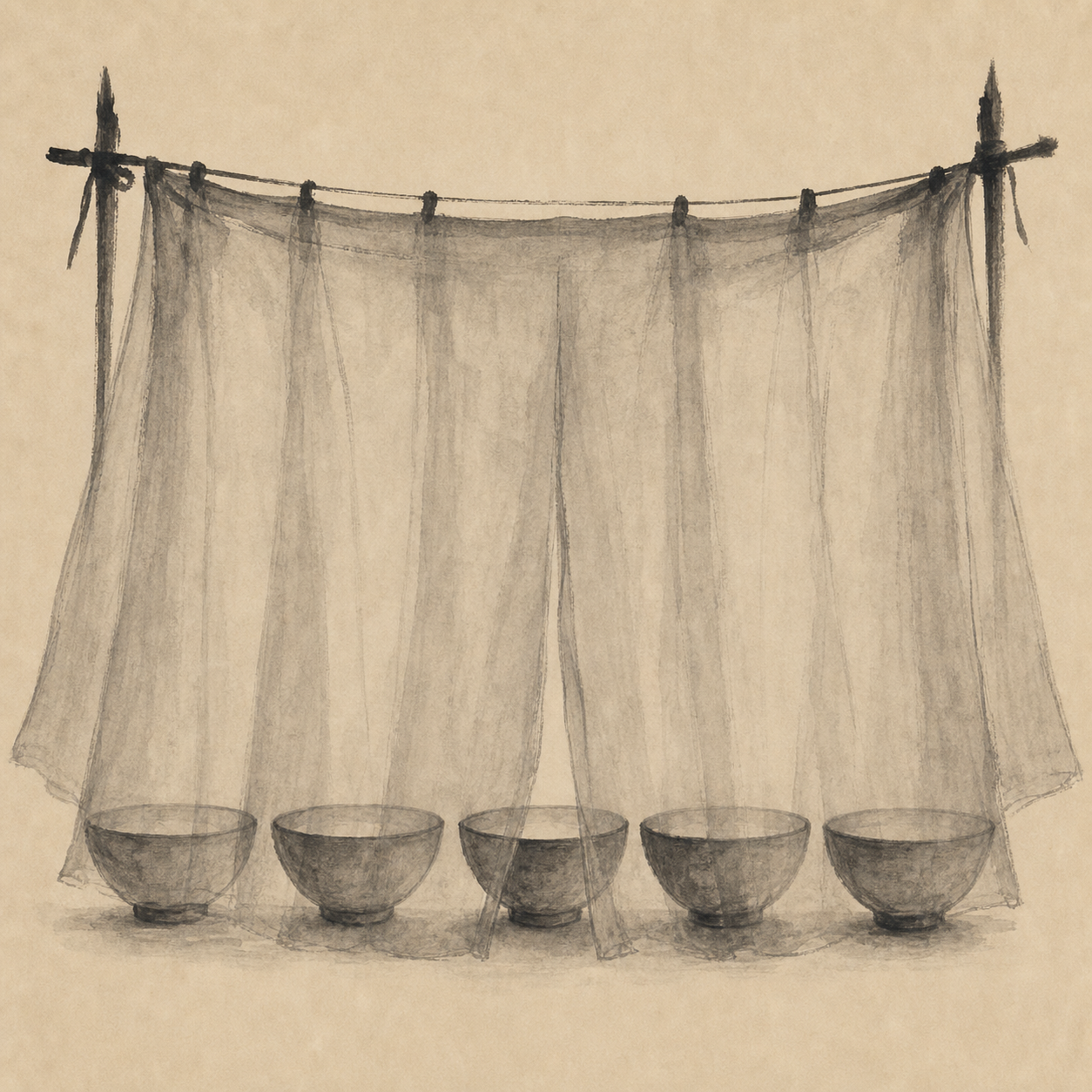
The Veil of Ignorance
- Choosing principles behind the veil of ignorancenot yet tested
- Equal liberties and the difference principlenot yet tested
- Risk-aversion and the maximin argumentnot yet tested
- Nozick, communitarian, and feminist objectionsnot yet tested
John Rawls, an American political philosopher at Harvard, published A Theory of Justice in 1971 — a 600-page book that helped drive the revival of systematic normative political philosophy in the Anglophone academy. Inside was a thought experiment of striking economy: imagine you must design the principles of justice for a society — but you don't know which position you will occupy in it; you don't know your race, sex, social class, natural talents, religion, or conception of the good. Behind this veil of ignorance, what principles would you choose? Rawls argued that rational agents under these conditions would choose principles that protect the worst-off — because they might be the worst-off — and the argument re-grounded liberalism against utilitarian and libertarian challenges.
Rawls's thought experiment — the original position — is a procedural device for specifying what fair principles of justice would be: persons in the original position are rational, mutually disinterested, risk-averse, and behind the veil of ignorance (they don't know any morally arbitrary features of themselves), choosing principles that will govern the basic structure of society. Rawls argues these agents would choose two principles: equal basic liberties for all, and social and economic inequalities permitted only if they attach to positions open under fair equality of opportunity and work to the greatest benefit of the least advantaged (the difference principle). The core argument is that behind the veil you might end up as the worst-off person, and risk-aversion under radical uncertainty leads to maximin — choose the arrangement whose worst possible outcome is best. Inequalities are justified only if they raise the floor. Rawls departs from utilitarianism by refusing to aggregate welfare across persons, from libertarianism by requiring redistribution for the worst-off, and from desert-based theories by treating natural talents as morally arbitrary. The framework was immediately contested. Robert Nozick's Anarchy, State, and Utopia (1974) attacked from the libertarian right: any pattern of distribution can be made unjust by free exchange. Communitarians (MacIntyre, Sandel, Walzer) attacked the unencumbered self of the original position as a fictional picture of human agency always already embedded in particular communities. Feminist philosophers (Susan Moller Okin, 1989) noted that the original position abstracts away from the family — the first unjust institution most people encounter. Amartya Sen's The Idea of Justice (2009) argued that Rawls's single-shot specification of just institutions misses how justice is actually achieved through comparative judgments about which arrangements are more or less just.