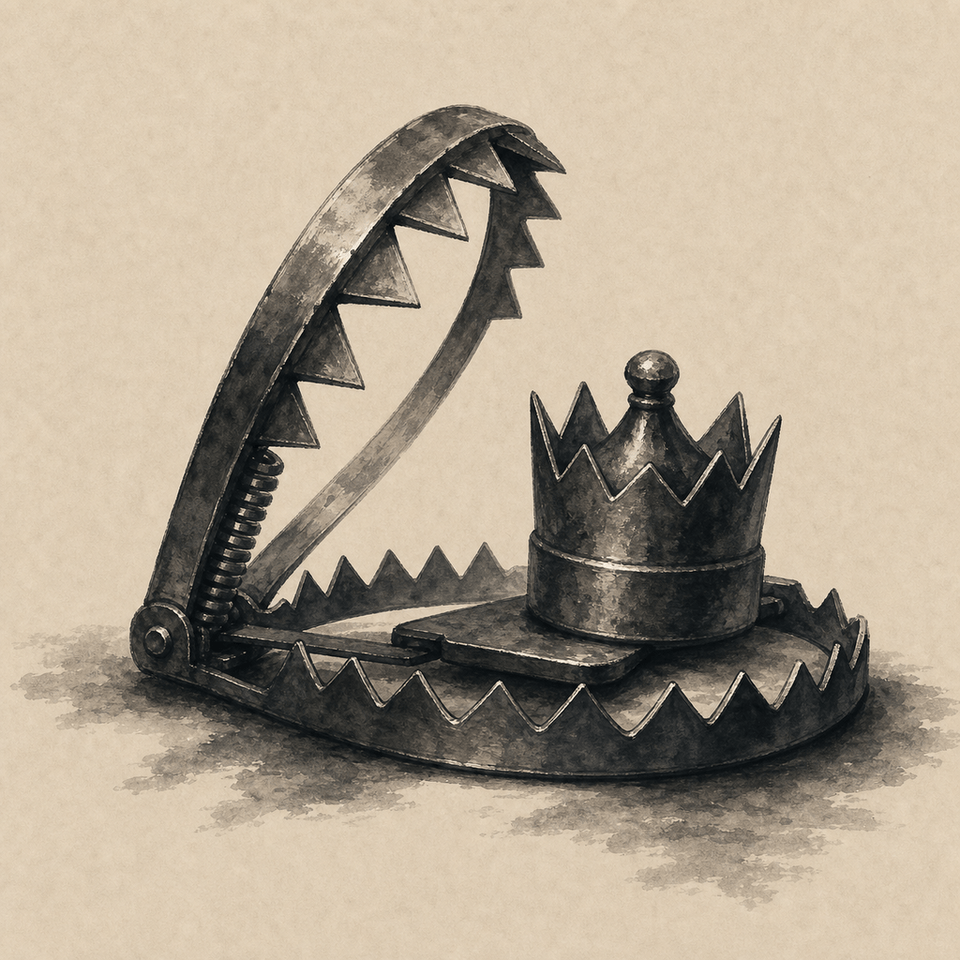
The Thucydides Trap
The Athenian general Thucydides, writing in the late fifth century BCE about the Peloponnesian War that ground down his own city, offered a one-sentence diagnosis that has outlived everything else in his history: 'It was the rise of Athens, and the fear that this inspired in Sparta, that made war inevitable.' Twenty-four centuries later, the Harvard political scientist Graham Allison gave that observation a name and a dataset. He and his team surveyed the past five hundred years of great-power transitions — Habsburg Spain meeting France, the Dutch Republic meeting England, France meeting a unifying Germany, Britain meeting Imperial Germany, and Russia, Japan and the United States meeting each other across the twentieth century — and found that in twelve of sixteen cases, roughly three-quarters, the encounter ended in war.
The framework is contested by historians: the sixteen cases don't reduce as cleanly as the slogan implies, several are coded debatably, and structural pressure is not destiny — four of Allison's own cases stayed peaceful, which is the whole point. The mechanism is plausible enough to be useful as a warning, not a historical law. A rising power has expanding interests it expects the system to accommodate and resents arrangements written when it was weak. A ruling power has commitments and a reputation it cannot abandon without inviting challenges everywhere at once. Each finds the other's reasonable behaviour threatening; each takes defensive steps the other reads as offensive; small frictions — a third-party ally, a contested island, an assassination — can light the whole structure. The trap is not that anyone chooses war. It is that peace requires deliberate, sustained, unsentimental management, and most regimes are not staffed, incentivised, or temperamentally equipped for it. Allison's escape routes are instructive precisely because they are unglamorous: redefine what counts as a vital interest, build institutions that let a rising power gain status without overturning the order, distinguish irritants from genuine threats, and buy time for the rising power's ambitions to mellow. The pessimistic reading is that these demand exactly the patience and self-restraint that nationalism and electoral politics erode; the optimistic one is that they have worked before, which is why a quarter of the cases avoided the cliff.