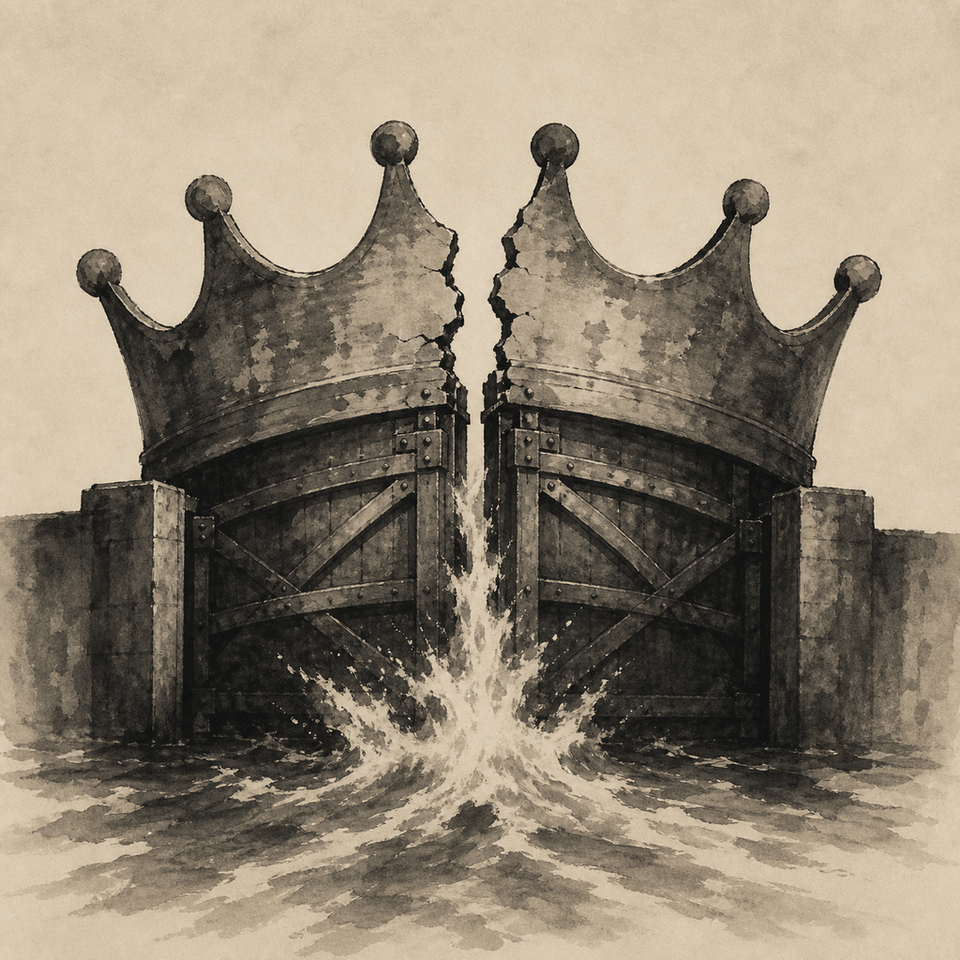
The Suez Crisis
In July 1956, Egypt's nationalist president Gamal Abdel Nasser nationalized the Suez Canal — the strategic shipping lane between the Mediterranean and the Red Sea, dug by Egyptian labour in the 1860s and operated in 1956 by a company dominated by British and French shareholders. Britain drew roughly two-thirds of its oil imports through the canal or connected Middle Eastern pipelines. Nasser meant to fund the Aswan High Dam with the tolls after Washington pulled its loan offer. Britain, France, and Israel answered with a secret plot hatched at Sèvres: Israel would invade the Sinai, and Britain and France would 'intervene' to 'separate the combatants.' Within days Anglo-French paratroops held Port Said. They had not told the United States. Eisenhower, blindsided a week before an election, threatened to dump sterling and block an IMF loan. Within two days the invaders took a ceasefire; by Christmas they were gone. That was the moment Britain and France learned they were no longer empires.
Suez was a hinge event in the post-1945 order on several axes at once. It proved that American power was now load-bearing for the Western system and that European action without Washington's consent was simply not viable; the British political class never recovered the assumption of independent great-power status, and Anthony Eden's premiership collapsed within weeks. It marked the peak of Arab nationalism — Nasser, having faced down two European empires and Israel and kept the canal, became the Cold War's most charismatic Third World leader, and Pan-Arabism dominated the region's politics for a decade, inspiring the short-lived United Arab Republic with Syria in 1958. It accelerated British decolonization: Harold Macmillan, who succeeded Eden, drew the lesson directly, and his 1960 'wind of change' speech conceded that empire by force was finished. And it drove Egypt deeper into partnership with Moscow — Nasser took the arms and the Aswan financing the Soviet bloc offered, opening a Soviet-Arab relationship that armed Egypt and Syria through the wars of 1967 and 1973. The crisis also split the Western alliance from the inside. For France, Suez reinforced a drive for strategic autonomy already under way, later expressed in the independent force de frappe and de Gaulle's exit from NATO's command.