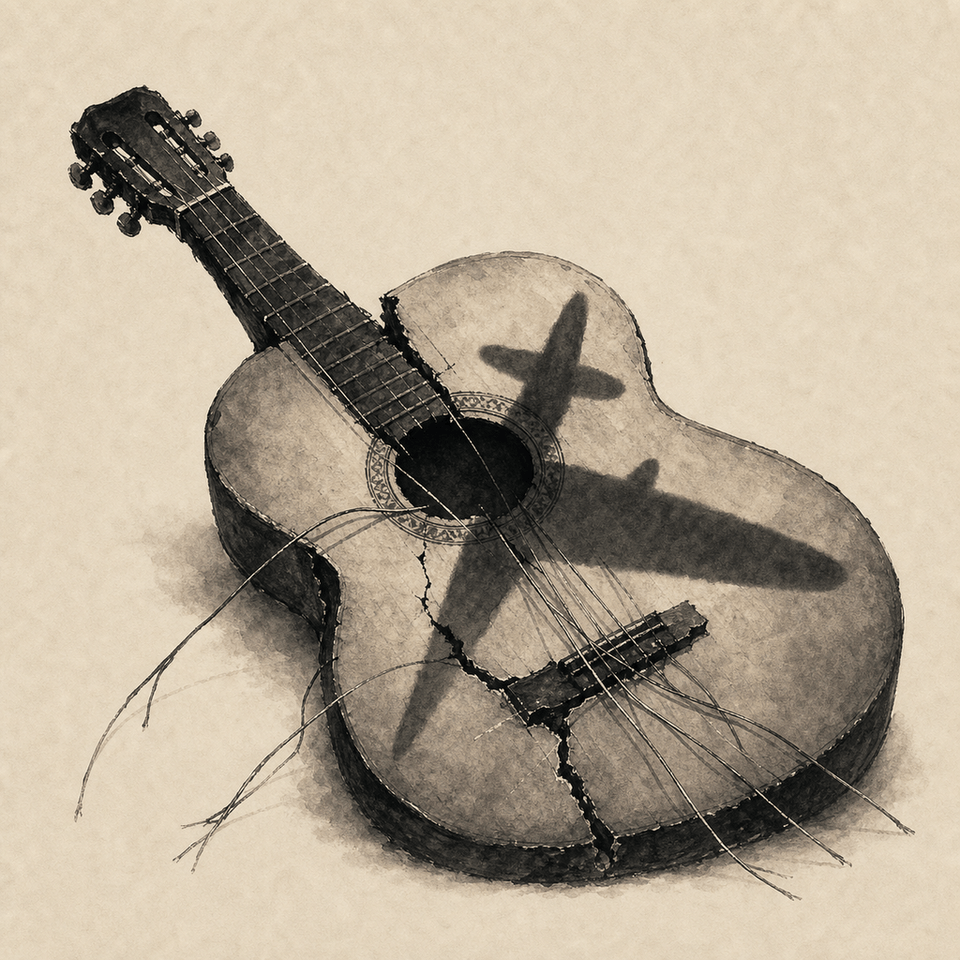
The Spanish Civil War
Between 1936 and 1939, Spain fought a civil war that became, in effect, the opening engagement of World War II. It began with a partial military coup in July 1936; when the coup stalled, the country split. Republican forces (the loyalist government, supported by the Soviet Union and some 35,000 volunteers of the International Brigades) fought Nationalist forces (Franco's military rebellion, supported by Nazi Germany and Fascist Italy) in a conflict that killed perhaps half a million people and ended with Franco's dictatorship — which lasted until 1975. The Spanish Civil War was the moment the international left understood what fascism would do, and the moment the international right understood what not fighting it would let happen.
The war's strategic significance outweighed the country's geopolitical weight. It was the testing ground for the doctrines of the coming continental war: tank warfare, dive-bombing, urban siege, and air-ground coordination. The German Condor Legion's destruction of Guernica in April 1937 — a Basque market town whose roads and bridge had military value but whose centre was devastated from the air, later memorialized in Picasso's mural — showed Europe what civilians would endure when air power was turned against a town. German and Italian forces refined here the methods they used in 1939–41, while Soviet aid bought Stalin leverage over Republican politics and a live trial of his own tanks and advisers. The war also produced a generation of antifascists — Orwell's Homage to Catalonia documents one, and records how the Republic devoured itself in factional purges between communists and anarchists, hobbling the war effort from within. Both sides ran campaigns of mass political killing behind the lines, the White Terror and the Red Terror. Britain and France's non-intervention policy was a humiliating failure: it embargoed arms to the legitimate government while failing to stop the open German and Italian aid pouring to Franco — a dress rehearsal for the appeasement that would follow at Munich in 1938. The war ended in April 1939 with a Nationalist victory, forty years of Francoist dictatorship, and — much later — a Spanish transition to democracy (1975–1982) that the rest of Europe came to consider exemplary.