The Security Dilemma
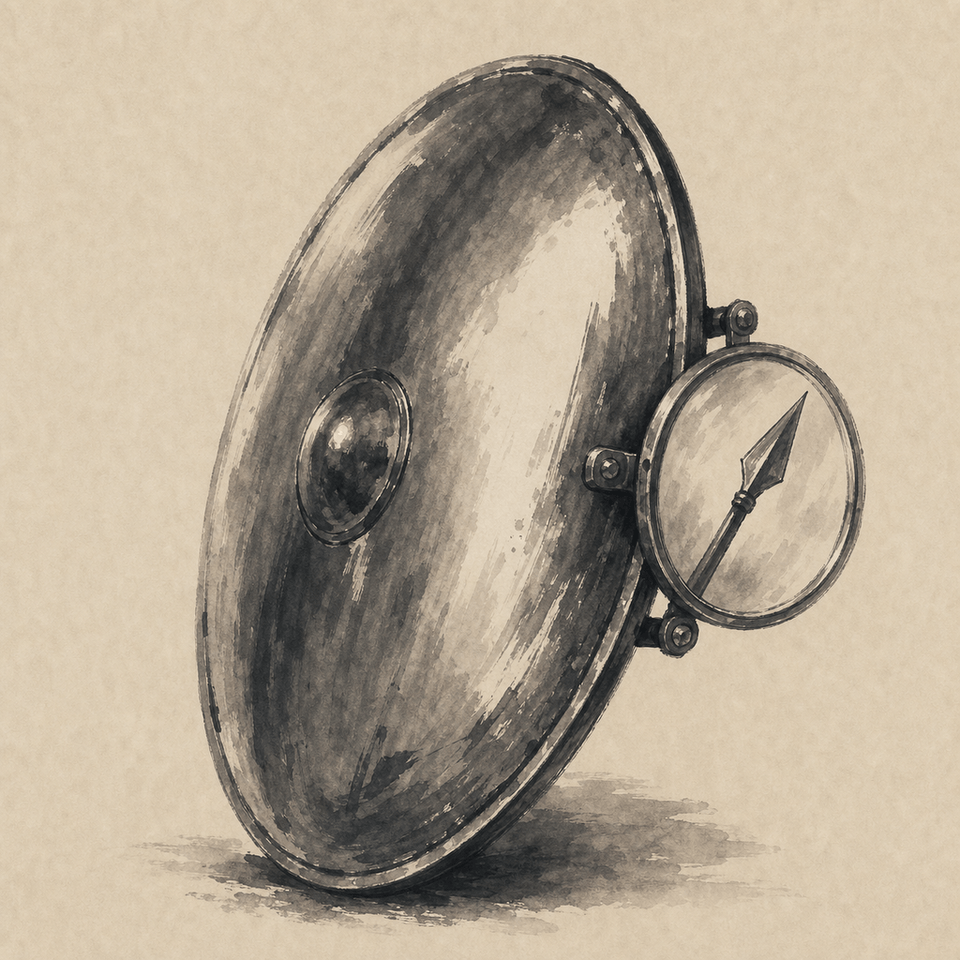
Two states, neither of whom intends to attack the other, can produce a war neither of them wants. The mechanism is straightforward. State A, fearing for its security, builds up its forces. State B, observing this, cannot read intent off capability — it cannot tell whether the buildup is a shield or a sword — and prudently builds up its own. State A, now facing a stronger neighbour, builds further. Each step is locally rational; the system slides toward catastrophe anyway. The cumulative effect is an arms race, mutual fear feeding on itself, and eventually a crisis in which someone, defensively, fires first because waiting feels more dangerous than striking. This is the security dilemma — the proposition, traced by John Herz and Robert Jervis, that the very measures one state takes to feel safe make every other state less safe.
The dilemma is the deep structural reason why anarchy — the absence of any authority above states able to enforce a promise — produces war even between governments that would both prefer peace. There is no 911 for nations; a state that disarms in good faith and misreads the other's intentions may not survive the error, so the prudent default is to assume the worst. It cannot be wished away by good intentions; it can only be managed by mechanisms that build trust faster than fear: arms-control treaties, on-site inspections and other transparency measures, hotlines like the one Washington and Moscow installed after the 1962 Cuban crisis, confidence-building deployments, and economic interdependence that raises the cost of conflict. The dilemma is more acute when defensive and offensive weapons are hard to distinguish (you cannot tell whether those tanks are for holding the border or rolling across it), and less acute when geography or technology gives one side a clear defensive advantage — fortifications, mountains, the dominance of the defence in the trenches of 1914 once they had set. Nuclear weapons are an instructive limit case: the balance of terror makes any first strike potentially suicidal, which dampens the dilemma, but warning times of minutes and launch-on-warning postures compress the fatal decision into a window too short for second thoughts, which sharpens it. The engine throughout is uncertainty about intentions, not necessarily malice; the tragedy is that both sides can be sincere.