The Scramble for Africa
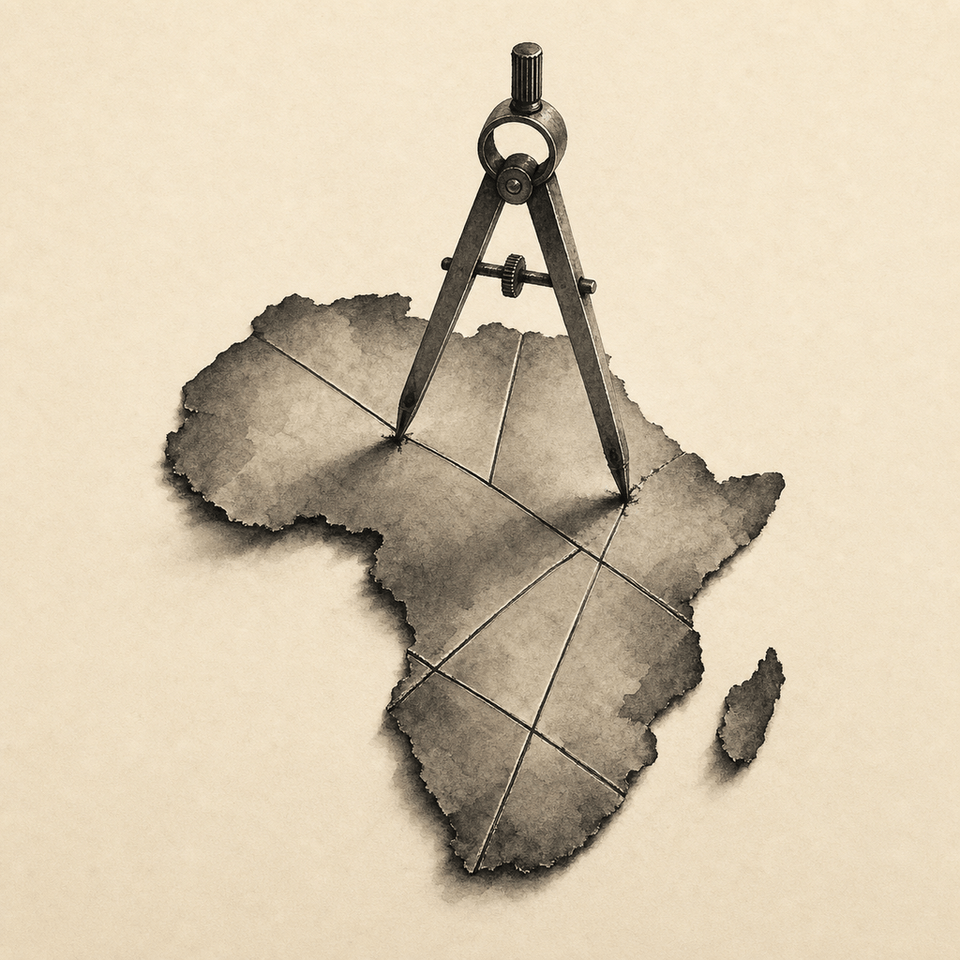
In November 1884, fourteen states (among them the United States and the Ottoman Empire, the rest European) gathered at the Berlin Conference, chaired by Bismarck in his own chancellery. Over the next three months, with no Africans present, they agreed on the rules by which they would partition the continent among themselves — chief among them the doctrine of effective occupation, which rewarded whoever could plant administrators and flags fastest. Within thirty years, every African polity except Ethiopia and Liberia was a European colony. The continent's borders, drawn by negotiators looking at incomplete maps in central European hotel rooms, are — with very few exceptions — the borders Africa lives with today.
The motivations were a tangled set: prestige competition between European powers in the wake of German and Italian unification, the Maxim gun and quinine making conquest feasible at low cost, the economic appetite for rubber, copper, gold, ivory, and palm oil, and a self-flattering ideology of 'civilizing mission' that allowed Europeans to describe the project to themselves as benevolent. The trigger was King Leopold II of Belgium, whose private encroachment on the Congo basin panicked France and Portugal into rival claims and forced Bismarck to convene the conference to keep the rush orderly. The reality was extractive and frequently genocidal — Leopold's privately owned Congo Free State alone killed perhaps ten million people through forced rubber quotas, hostage-taking, mutilation, and famine, until the scandal forced Belgium to annex it from its own king in 1908. Pre-existing African states, kingdoms, trading networks, and ethno-linguistic boundaries were over-ruled by lines on a map drawn by latitude and river rather than by who lived where. Ethnic groups that had lived together for centuries were divided into different colonies; groups that had been rivals were combined into single ones — the Hutu and Tutsi of Rwanda, the roughly 250 peoples folded into Nigeria, the Somalis split among five jurisdictions. Conquest was rarely uncontested: the Maji Maji revolt in German East Africa and the long Herero and Nama war — which ended in the first genocide of the twentieth century — show the cost. When independence came in the 1960s, the new states inherited those borders, and the conflicts written into them, and the Organisation of African Unity chose in 1964 to freeze them rather than reopen a continent of disputes.