The Renaissance
- Leonardo, Michelangelo, Botticellinot yet tested
- Rembrandt, Vermeer, Velázquez, Boschnot yet tested
- Perspective and the revivalnot yet tested
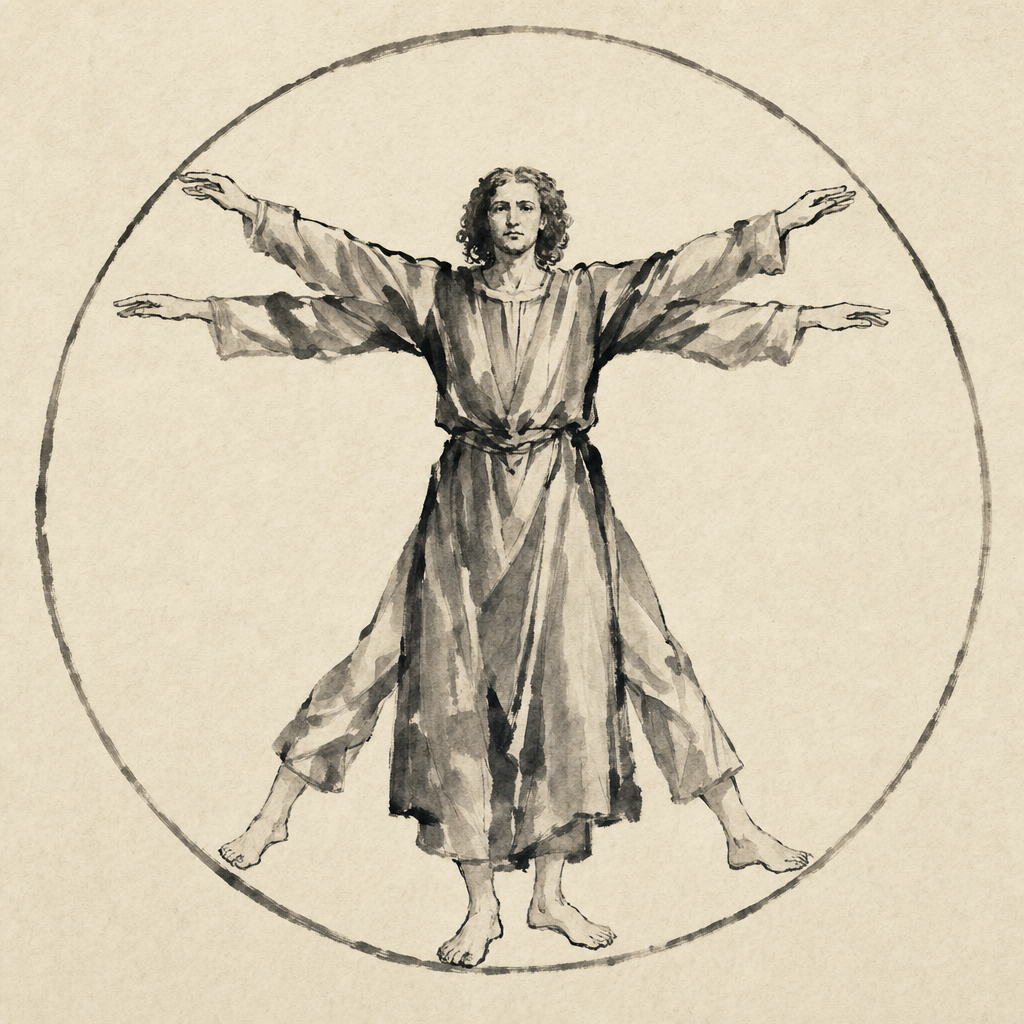
The Renaissance — a self-conscious cultural revival that began in Florence in the early fifteenth century, spread across Italy and northern Europe over two hundred years, and ended somewhere in the early seventeenth — is the canonical case of deliberate cultural rebirth. The educated Italians of the period believed they were recovering the lost civilization of antiquity after a thousand-year medieval interruption, and they coined the label for that interruption precisely because it sat between the antiquity they were returning to and the present they were creating. Whether the break was sharp or a gradual continuation of medieval developments is a long-running historical debate; the conviction of a rebirth, and what was made under it, is unmistakably real.
The Italian Renaissance (~1400–1600) ran a distinct technical program. Linear perspective (Brunelleschi 1413, codified by Alberti 1435) gave painters geometric control over pictorial space; anatomical study, climaxing in Vesalius's 1543 De humani corporis fabrica, gave them control over the human body; oil paint, developed in Flanders and transmitted south by mid-century, gave them new chromatic range; and unprecedented patronage from the Medici, the Sforza, and the Catholic Church funded the program at scale. The signature works follow: Brunelleschi's Florence Duomo dome (1436), Masaccio's perspectival Trinity (1427), Botticelli's Birth of Venus, Leonardo's Mona Lisa, Michelangelo's David and Sistine Chapel ceiling, Raphael's School of Athens. The northern Renaissance — Jan van Eyck's Arnolfini Portrait, Dürer's Melencolia I, Bruegel's The Hunters in the Snow, Bosch's Garden of Earthly Delights — developed in parallel, more naturalistic in detail and less classical-revivalist in program. Beyond visual art the period reshaped everything else in a single arc: humanism (Petrarch, Ficino, Erasmus) recovered Greek and Roman texts and built the studia humanitatis that shaped European education for four centuries, Machiavelli's The Prince (1513) reinvented political analysis as the empirical study of power, and Copernicus's De revolutionibus (1543) put the Sun at the center and set up the scientific revival that culminated in Galileo and Kepler. The period's self-image of recovering a lost classical greatness was historically inaccurate in the strict sense — the medieval period had its own continuities, and much of antiquity returned through Arabic translations preserved in Islamic civilization — but the creative output of two centuries of artists believing in a rebirth is unmistakably one of the great cultural episodes in recorded history.