The Recording Era
- Edison's cylinder and the acoustic eranot yet tested
- The microphone and electric recordingnot yet tested
- Magnetic tape: editing as compositionnot yet tested
- From LP to streaming as the default encounternot yet tested
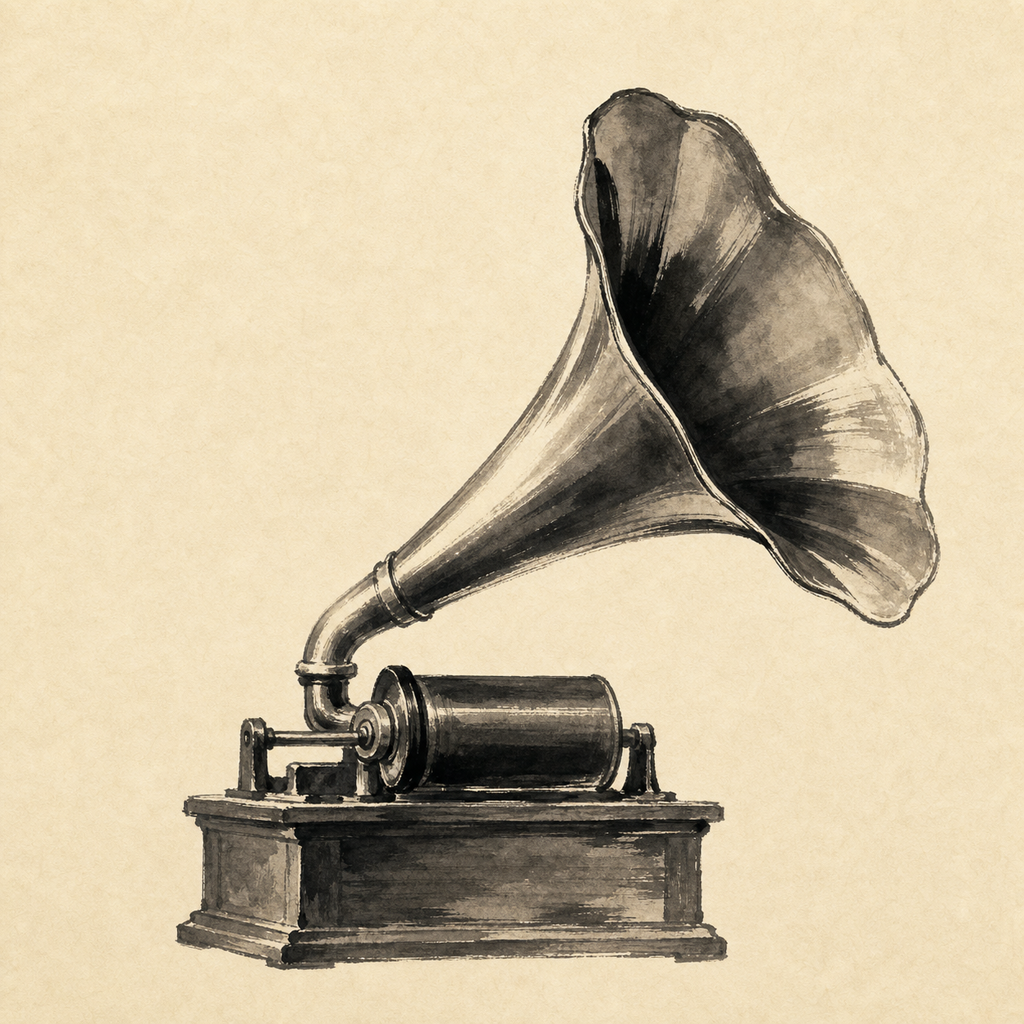
On a winter day in 1877 at Menlo Park, Thomas Edison shouted Mary had a little lamb into a horn, and the vibrations scratched the words into a sheet of tinfoil wrapped on a spinning cylinder. The playback was crude and the foil crumbled after a few turns, but something unprecedented had happened: for the first time in human history, a particular performance had been prised loose from the instant of its making and could be heard again, elsewhere, later. Within seventy years music would be remade from a fleeting, one-time event into a durable object one could own, mail, and eventually rebuild — one of the largest shifts in how human beings have ever encountered an art.
The seven decades from tinfoil to the LP pass through three stages, and each deepens what a recording can be. The first was simply capture. Early recording was purely mechanical — a horn funneled sound onto a needle that cut the groove directly — so it could catch a loud voice or a brass band but drowned strings and piano, and held only two or three minutes a side. It changed the world anyway: Emile Berliner's flat disc, far easier to mass-produce than Edison's cylinder, won the market, and Caruso's 1902 sessions sold in the millions and made the recorded singer a global star for the first time. The second stage was fidelity. When the microphone replaced the horn in 1925, the range of capturable sound widened dramatically — a full orchestra, soft dynamics, the shimmer of high overtones all came within reach — and recorded music stopped being a shrunken souvenir of a performance and began to resemble it. The third and most transformative stage was editing, and it arrived with magnetic tape at the close of the Second World War. Tape could be cut, spliced, layered, and overdubbed, so a recording no longer had to document a single unbroken take: it could be assembled, corrected, built from moments that never happened at once. At that point the record stopped being a transcript and became a medium in its own right (concept 290) — something a musician composes rather than merely captures. The same year, 1948, brought the long-playing vinyl disc, at last long enough to hold a whole symphony movement. Capture, then fidelity, then editability: a steady march from writing music down as it happened to building music that never happened at all.