The Mind-Body Problem
- Descartes's two substances: res cogitans and res extensanot yet tested
- Monism and the physicalist positionsnot yet tested
- The explanatory gap and the Hard Problemnot yet tested
- The 1641 Meditations and the cogitonot yet tested
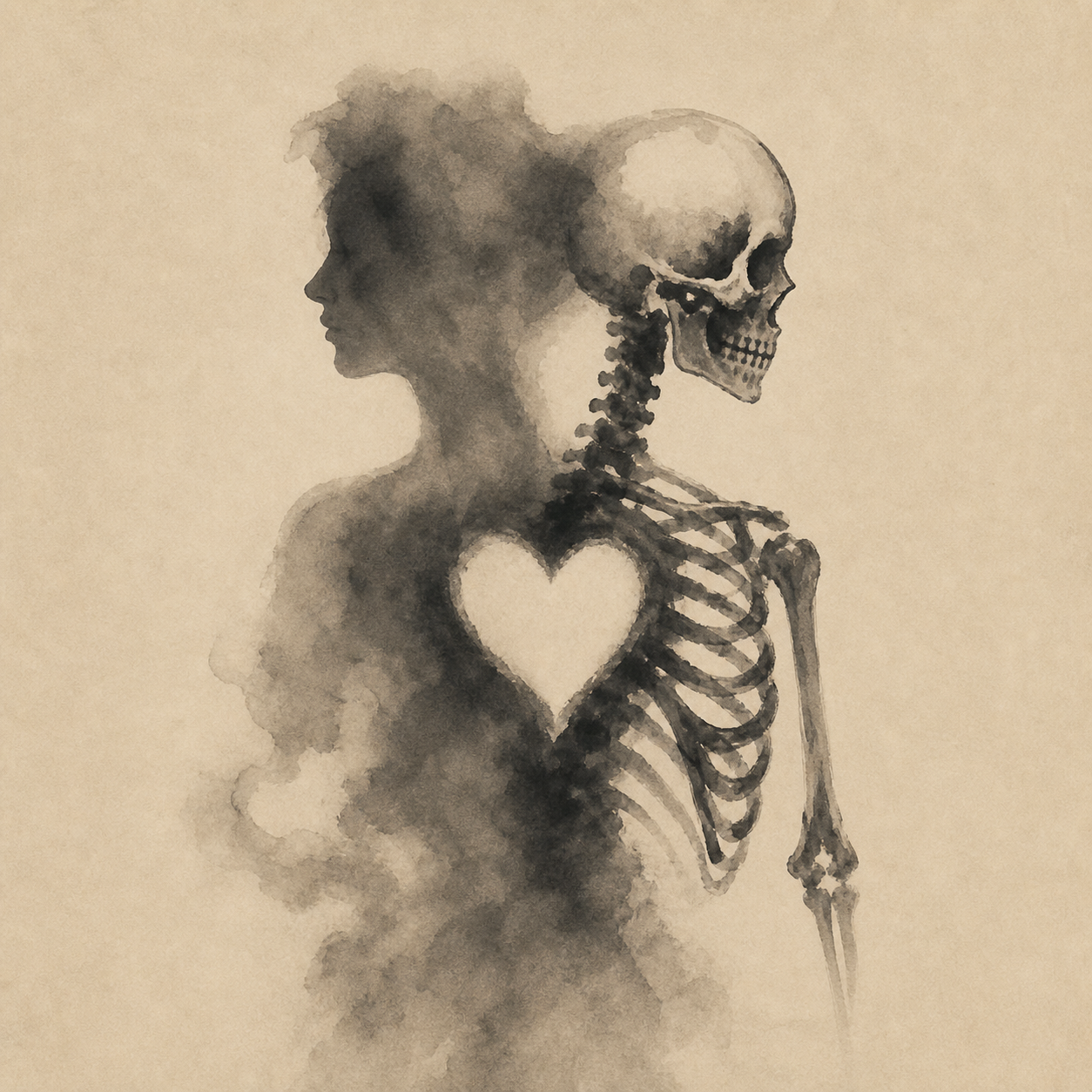
René Descartes — French philosopher, mathematician, soldier — published the Meditations on First Philosophy in 1641, containing a metaphysical position so memorable that the contemporary debate is still organized against it: substance dualism. Mind (res cogitans, thinking substance) and body (res extensa, extended substance) are two fundamentally different kinds of stuff — the mind has no spatial extension, the body no consciousness — and they interact (Descartes nominated the pineal gland as the locus) but are categorically distinct. The position is now considered indefensible — three centuries of neuroscience have demolished substance dualism — but the underlying problem, the explanatory gap between physical processes and subjective experience, remains the central puzzle of philosophy of mind, and the contemporary debate has not converged on a satisfying alternative.
The mind-body problem is the family of questions about how mental phenomena (thoughts, perceptions, emotions, intentions, conscious experience) relate to physical phenomena (neural firing, biochemistry, electromagnetic fields). The contemporary positions are roughly six. Physicalism holds that mental states are physical states, with subdivisions: type identity theory (pain is C-fiber firing — weakened by multiple realizability, since pain in octopuses doesn't involve C-fibers), token identity theory, and functionalism (mental states are defined by their causal role rather than what they're made of — the position that grounds the AI-mind question and has dominated academic philosophy since mid-century). Property dualism (one kind of stuff, two kinds of properties) was defended by Chalmers in his 1995 Hard Problem paper. Eliminative materialism (Paul and Patricia Churchland) holds that folk-psychological terms like belief and desire don't refer to anything real and will be replaced by neuroscience. Panpsychism (Galen Strawson, Philip Goff, recent Chalmers) holds that some mental properties are fundamental and ubiquitous, with physical reality having an intrinsic phenomenal nature physics has missed. Mysterianism (Colin McGinn): the human cognitive apparatus is constitutively unable to grasp the solution. Idealism: the only fundamental reality is mental — once dominant in Berkeley and Hegel, now rare. The empirical evidence mostly constrains rather than settles the debate: brain damage affects mental life, psychoactive drugs alter consciousness, split-brain patients show that hemisphere disconnection produces partially distinct conscious streams, anesthetics abolish consciousness reversibly. The Hard Problem of Consciousness (Chalmers, 1995) is the modern descendant of Descartes's puzzle: even if we explain all the easy problems, why is there something it is like to undergo conscious experience?