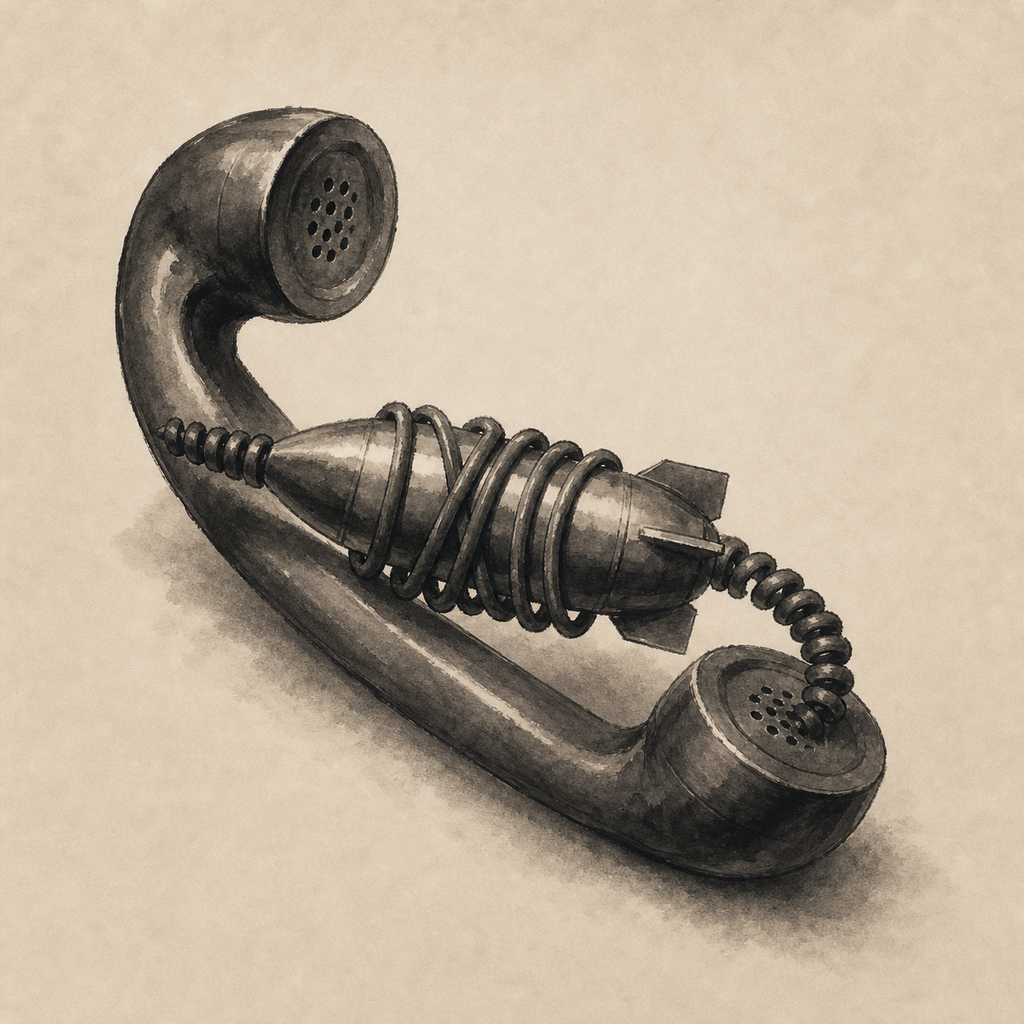
The Cuban Missile Crisis
On October 14, 1962, an American U-2 reconnaissance flight photographed Soviet medium-range nuclear missile launchers being assembled in western Cuba — ninety miles from Florida. The intelligence reached President Kennedy two days later. For the next thirteen days, the United States and the Soviet Union conducted the closest approach to nuclear war the species has yet survived. Khrushchev's gamble was to put American cities under the same immediate nuclear threat that Washington's Jupiter missiles in Turkey and Italy posed to the Soviet Union, and to redress a wider strategic imbalance. Kennedy convened a secret committee of advisers — the ExComm — that debated everything from invasion to acquiescence. His chosen response, a naval 'quarantine' rather than the air strike his Joint Chiefs demanded, was deliberately the least irreversible option: it created the time and space for back-channel negotiation that, on the 28th, defused the crisis.
The deal was a quiet reciprocal withdrawal: Soviet missiles out of Cuba, in exchange for a public US pledge not to invade and a private commitment, conveyed by Robert Kennedy to Ambassador Dobrynin, to remove the Jupiter missiles from Turkey within months. The secrecy mattered — Kennedy could not be seen to trade away an ally's defense under duress, so for decades the Turkish concession was hidden, leaving a false legend of pure American firmness that warped how a generation of strategists read 'standing tough.' Both leaders had been less in control of their own militaries than they wanted to admit, and the crisis was nearly decided not by them but by men they would never meet. On the Soviet submarine B-59, harried by US Navy signalling depth charges near the quarantine line and cut off from Moscow, exhausted officers argued over readying a nuclear torpedo; Vasili Arkhipov, the flotilla chief of staff aboard, helped persuade the captain to surface instead. A U-2 was shot down over Cuba on the 27th, killing pilot Rudolf Anderson, exactly when both leaders were straining to stop the slide — and Khrushchev had not ordered it. Each side, in other words, kept discovering that the machine it commanded had a will of its own. The Moscow–Washington hotline was installed the next summer, and the 1963 Partial Test Ban Treaty followed, because both sides realized that they had been a phone call away from extinction and did not have the phone.