The Columbian Exchange
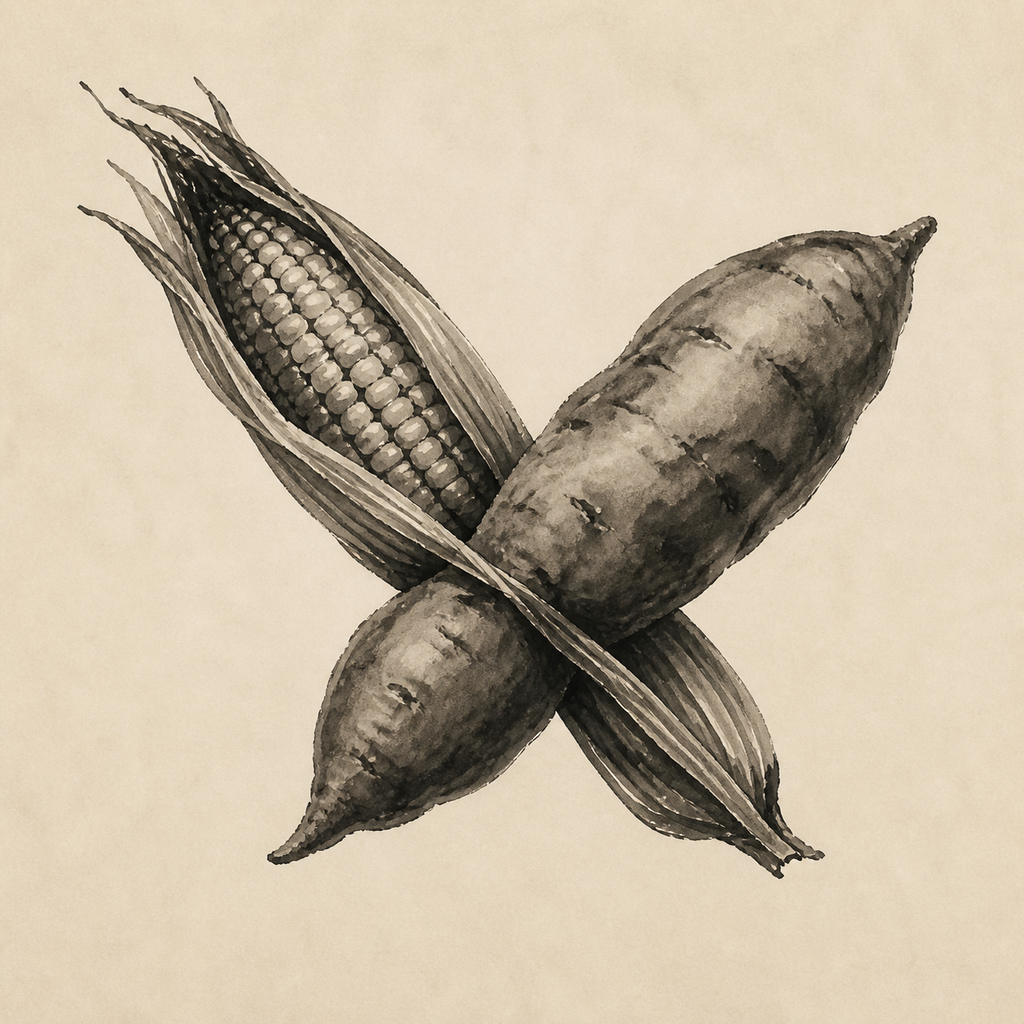
For roughly twelve thousand years, the Americas had evolved in biological isolation. Different mammals, different crops, different diseases, different gods. Columbus's landfall in 1492 ended that isolation in a single generation, and the consequences were so total they are easy to miss. The potato — Andean, domesticated near Lake Titicaca — would feed the population boom of northern Europe and the Russian peasantry, and its 1840s failure would empty Ireland. Maize and cassava would underwrite the rise of West African slave-trading kingdoms and reshape Chinese demographics, pushing farmers up hillsides too steep for rice. The horse, extinct in the Americas for ten thousand years, would return aboard Spanish ships and create the mounted Plains Indian cultures — Comanche, Lakota, Cheyenne — that nineteenth-century Americans would then destroy.
The trade ran both ways, but unevenly. Eurasia sent its crowd diseases — smallpox, measles, influenza, typhus — into populations with no acquired immunity, the legacy of millennia spent living alongside domesticated herds. Within a century, perhaps ninety percent of the indigenous population of the Americas was dead, falling from an estimated 50–60 million toward fewer than ten. This was not metaphorical genocide; it was a depopulation at a scale the species had never experienced — the so-called virgin-soil epidemics often outran the conquistadors, killing communities that had never seen a European, which is part of why a few hundred men under Cortés and Pizarro could topple the Aztec and Inca states: smallpox reached Tenochtitlan and Cusco before the decisive battles did. The Atlantic slave trade was, in part, an answer to the labour vacuum the dying left behind: Africans, carrying their own Old World immunities, were forced into the plantations the Taino and the Mexica could no longer staff. The flow westward was just as transformative — wheat, cattle, pigs, and sugarcane remade American landscapes, while the Manila galleons carried American silver to China and Andean potatoes and maize quietly underwrote demographic surges from Fujian to the Rhineland. The exchange also reshaped land itself, as one historian, Alfred Crosby, who named the phenomenon in 1972, emphasised: European livestock, weeds, and pathogens overran entire ecosystems. Nothing about the modern world's demography, diet, or economic geography survives unaltered by 1492.