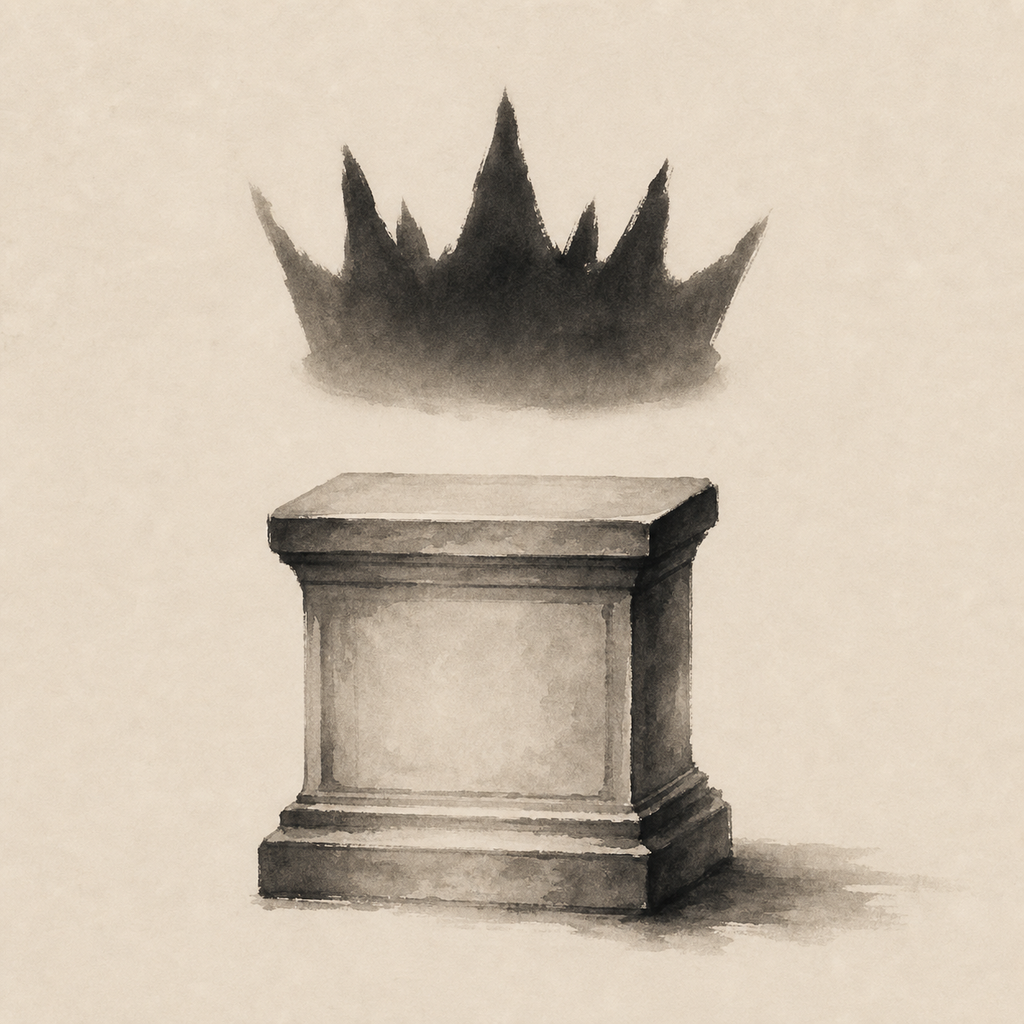
The Canon Question
- The canon as historically constructed, not self-evidentnot yet tested
- Criteria that describe the canon as much as justify itnot yet tested
- Great Books defense versus the too-narrow critiquenot yet tested
- The opaque recommender as new canon-makernot yet tested
Who decides what counts as great? For most of European intellectual history the answer was largely self-evident to the people doing the deciding — Homer, Virgil, Dante, Shakespeare, Rembrandt, Bach, Tolstoy were figures so widely venerated that the question why these and not others rarely surfaced. In the late twentieth century that self-evidence dissolved: feminist, postcolonial, and critical-race scholars argued that the canon's apparent neutrality masked a structurally narrow selection of European, male, Christian authors, that the gatekeepers shared the same backgrounds, and that the criteria used to evaluate works — universality, technical mastery, enduring reputation — were themselves products of the canon they claimed to judge.
The canon question is really a meta-question about how cultural value is constructed and maintained — not whether Shakespeare is great or Beethoven profound, but how universities, museums, publishers, prize juries, critics, and libraries collectively keep a list of works that get taught, displayed, performed, anthologized, and remembered, and how that list could be otherwise. The canon turns out to be historically constructed. Shakespeare's elevation to central English author is largely an eighteenth- and nineteenth-century project (Garrick's stage revival, the 1769 Stratford Jubilee, the labor of Victorian critics and editors); Bach's centrality dates from Mendelssohn's 1829 revival of the Matthew Passion; the Western literary canon was substantially codified late in the nineteenth century in service of nation-building and the founding of literature as a university discipline. Its selection criteria — universality, psychological depth, technical innovation, moral seriousness — describe the canon as much as they justify it, and works that fail those criteria but succeed by others (community-binding, ritual function, oral transmission) are systematically undervalued.
Two intertwined positions follow. The Great Books defense, articulated by Allan Bloom in The Closing of the American Mind and Harold Bloom in The Western Canon, holds that the canonized works are objectively excellent in ways that justify continued centrality, and that expanding on demographic grounds risks substituting political criteria for aesthetic ones. The too-narrow-canon position, voiced by Toni Morrison, Edward Said, Stuart Hall, and Henry Louis Gates Jr., holds that demographic representation is itself aesthetically relevant — works engaging the experiences of underrepresented groups bring distinctive insight homogeneous canons lack — and that the canon's universality claim often masks parochialism. Most working compromises sit in the middle: expand rather than replace, decentralize into parallel canons, or teach the selection history alongside the works. The debate is structurally unresolvable; no neutral, non-political criterion for canon selection exists.