The Absurd: Camus, Sisyphus, Revolt
- The gap between our hunger and the universe's silencenot yet tested
- Suicide as philosophy's one serious problemnot yet tested
- Living the absurd: revolt, freedom, and passionnot yet tested
- From Sisyphus to The Rebel and the novelsnot yet tested
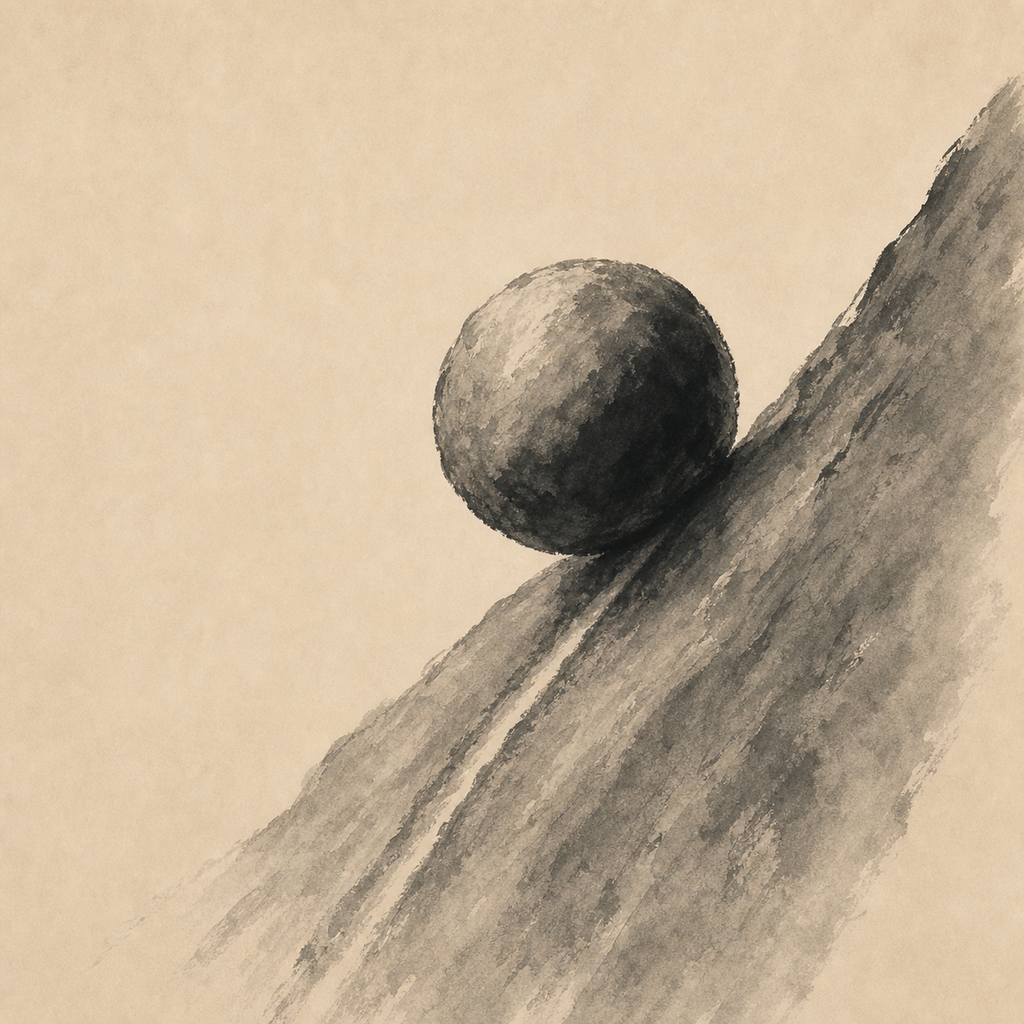
Albert Camus opened The Myth of Sisyphus, published in occupied France in October 1942, with a single sentence: There is but one truly serious philosophical problem, and that is suicide. Judging whether life is worth living, Camus argued, is the fundamental question of philosophy. His answer across the next hundred and twenty pages: life is not worth living for any external reason, but it is worth living anyway, and the recognition of the absurd — the gap between our hunger for meaning and the universe's refusal to provide it — is the beginning of a particular kind of moral seriousness. Sisyphus, condemned by the gods to roll a boulder up a hill forever, is the emblem. We must imagine Sisyphus happy.
The absurd, in Camus's technical sense, is not a property of either the universe or the human; it is the encounter between them. The universe is silent; the human demands sense. The standard responses Camus identifies and rejects are philosophical suicide — positing a transcendent meaning (God, History, Spirit) to dissolve the absurd, the move he reads in Kierkegaard, Husserl, Jaspers, and Shestov — and literal suicide, ending the contradiction by ending the encounter. Both, in Camus's view, evade the absurd. The third option — to live with the absurd — requires three things: revolt (refusing the silent universe by continuing to demand meaning anyway), freedom (the freedom that comes from recognizing no external authority can ground a choice), and passion (engagement with whatever life one in fact has). The figure of the absurd man — the conqueror, the actor, the creator, the seducer — is one who lives in full awareness of the absurd without trying to resolve it. Camus extended the framework to politics in L'Homme révolté — The Rebel — published in 1951, arguing that revolt is the absurd's political extension: ethical life consists in maintaining the refusal without slipping into the revolutionary logic that justifies any present cruelty by future redemption. The book triggered a notorious rupture: it was reviewed harshly in Sartre's journal Les Temps modernes by Francis Jeanson, and the public exchange of open letters that followed between Sartre and Camus ended their friendship. Camus's three iconic novels — The Stranger (1942), The Plague (1947), and The Fall (1956) — are the absurd as fiction: an Algerian clerk who feels nothing at his mother's funeral and is condemned for that more than for the murder he commits; an Oran physician who treats plague victims while refusing to make their suffering meaningful; a Parisian lawyer who confesses to a stranger across nights of monologue. Camus won the 1957 Nobel Prize in Literature; he died in a car accident at forty-six in 1960.