Soft Power
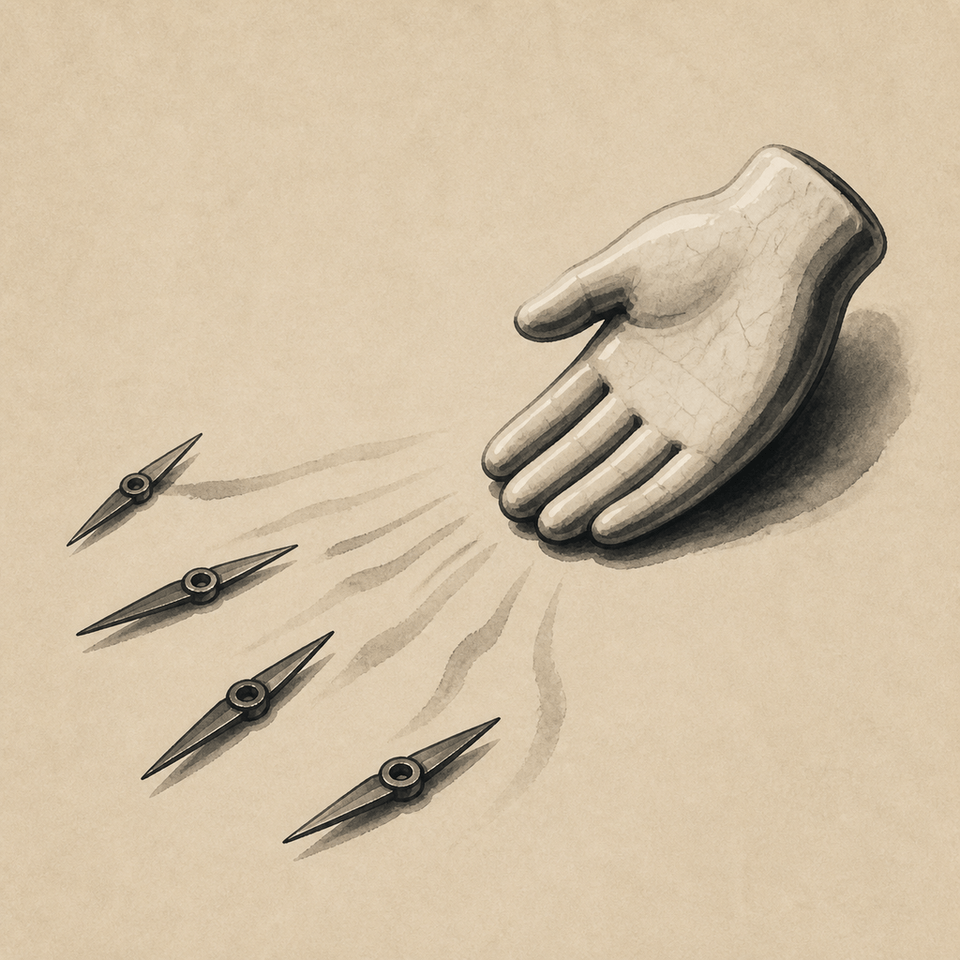
In 1990, in Bound to Lead, the Harvard political scientist Joseph Nye coined the term soft power to describe what the United States had in abundance and the dying Soviet Union had almost none of: the ability to make others want what you want without paying or threatening them. Hollywood. Harvard. Levi's. The Bill of Rights. The English language. Coca-Cola. NATO membership as a status good. Rock and jazz smuggled across the Iron Curtain on cassette. The American university as a coveted destination for ambitious students abroad. The cumulative pull of a culture that other societies wanted to imitate — and other elites wanted their children to join — was a kind of currency the Soviets could not print, and its absence was one quiet reason their empire dissolved with so few willing to defend it.
Soft power is what realism is bad at explaining, because it runs on attraction rather than coercion and shows up nowhere in a tally of tanks and GDP. States with lots of it — the US in the 1990s, France for two centuries of language, cuisine and revolutionary ideals, mid-twentieth-century Britain coasting on its institutions, and contemporary Japan and South Korea exporting anime, cuisine and K-pop — extract enormous compliance from the international system without commensurate hard-power exertion: allies bandwagon, norms get written in their idiom, talent migrates toward them. States with little of it — contemporary Russia, and China through much of the post-Mao era — find that even their hard-power moves get politically expensive because the world isn't on their side. The mechanisms are mostly indirect and slow: cultural exports shape elite preferences abroad; educational exchange creates lifetime affinities in people who later run ministries; civil-society linkages create domestic constituencies that lobby their own governments. Crucially, soft power flows largely from civil society, not the state, which is why it resists being commanded. The Chinese Communist Party has spent two decades and tens of billions trying to manufacture it — Confucius Institutes on foreign campuses, the global broadcaster CGTN, the Belt and Road repackaged as a benevolent brand — with mixed results, because soft power visibly produced by a state propaganda apparatus tends to read as hard power in disguise, which is precisely what Nye predicted.