Romanticism
- Van Gogh and the painterly afterlifenot yet tested
- Friedrich, Turner, the sublime landscapenot yet tested
- Géricault, Delacroix, the political canvasnot yet tested
- Beethoven and the Romantic symphonynot yet tested
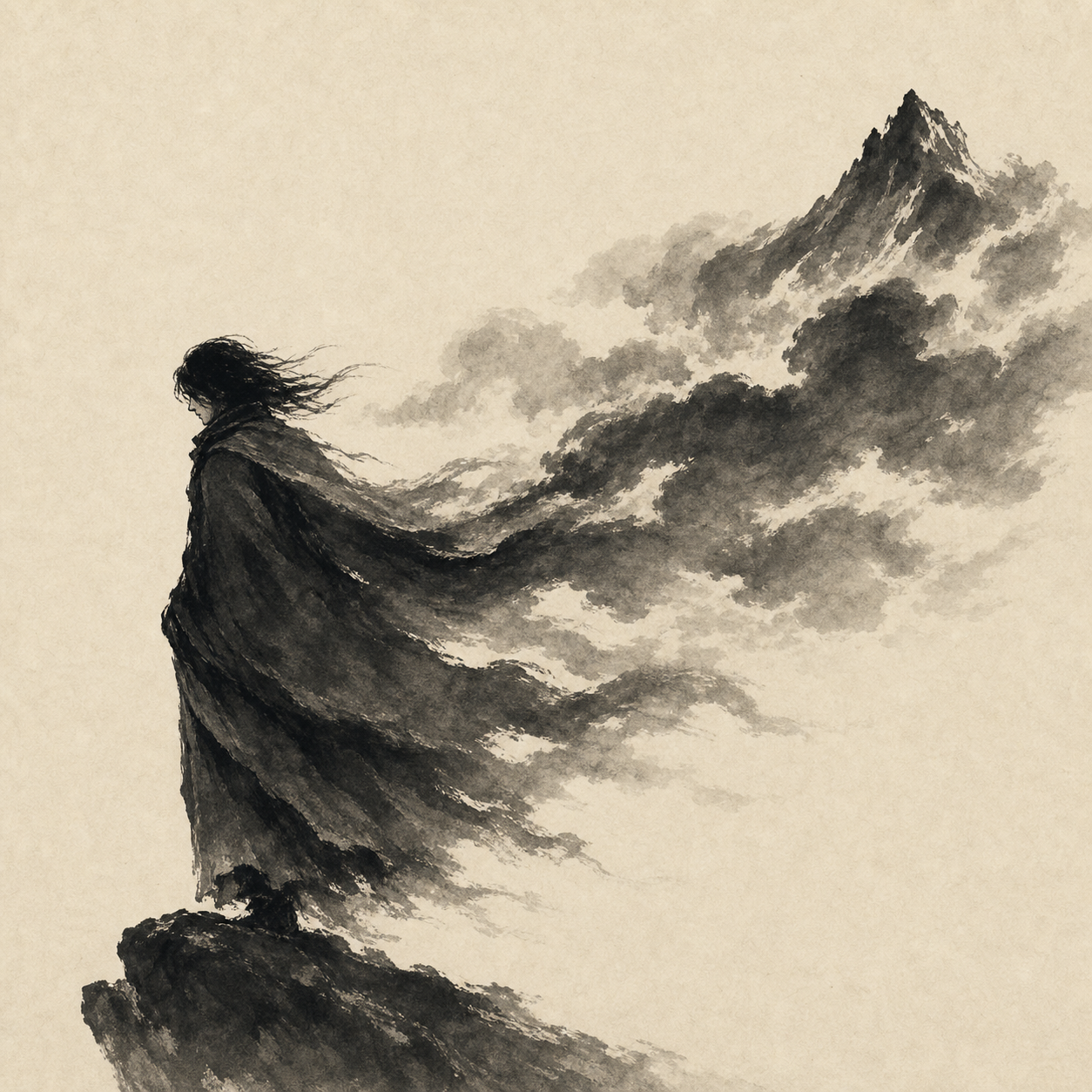
Romanticism is the artistic and cultural movement of roughly 1770–1850 that put the individual subject at the centre of European art, philosophy, and music. Sturm und Drang in 1770s Germany — Goethe's The Sorrows of Young Werther (1774), Schiller's The Robbers (1781) — was the first wave. Wordsworth and Coleridge's Lyrical Ballads (1798) brought it into English; Caspar David Friedrich's Wanderer above the Sea of Fog (1818) gave it visual form, Beethoven's Ninth (1824) musical, Mary Shelley's Frankenstein (1818) gothic-novel, Delacroix's Liberty Leading the People (1830) political. The Romantics knew they were rebelling against the Enlightenment, and invented the modern conception of the artist as set apart.
Romanticism is not a single doctrine but a family of related commitments. The substitution running through all: private, personal, emotional experience replaces the public, civic, moral themes that organised neoclassical art. The subjective lyric is the Romantic form par excellence; organic form replaces eighteenth-century rule-making; imagination — the creative, integrative, world-making faculty Coleridge distinguished from mere fancy — replaces reason as the proper artistic centre. Music rose furthest of all: Romantic aesthetics made it the art that reaches where words stop, and the century's repertoire was built on that claim by Schubert, Schumann, Chopin, Berlioz, Liszt, Wagner, Brahms, and Tchaikovsky (brief 287). Nature is reread along the same axis: cultivated fields give way to terrifying nature — Friedrich's icy seas, Turner's storms, the Alpine sublime — no longer a backdrop but a force before which human concerns dwindle. The Romantic hero (Werther, Childe Harold, Onegin, Heathcliff) is socially marginal, psychologically intense, doomed; the form continues into Modernist anti-heroes and contemporary anti-hero television. Romanticism also rediscovered the medieval, the folk (Herder, the Brothers Grimm), and the non-Western (Goethe's West-östlicher Divan, the Romantic Orientalist tradition). Above all it gave us the artist as visionary — Blake's prophetic poetry, Beethoven's late quartets, Shelley's claim that poets are the unacknowledged legislators of the world — surviving as the modern cult of the artist. Historically the movement was a response: to Enlightenment reason, to the French Revolution, to the Industrial Revolution it viewed with horror and fascination, and to a secularisation whose absence it filled with art, nature, and the inner life.