Polymers & Macromolecules
- Polymers built from monomersnot yet tested
- Plastics and rubber in daily lifenot yet tested
- Aramids and engineered fibresnot yet tested
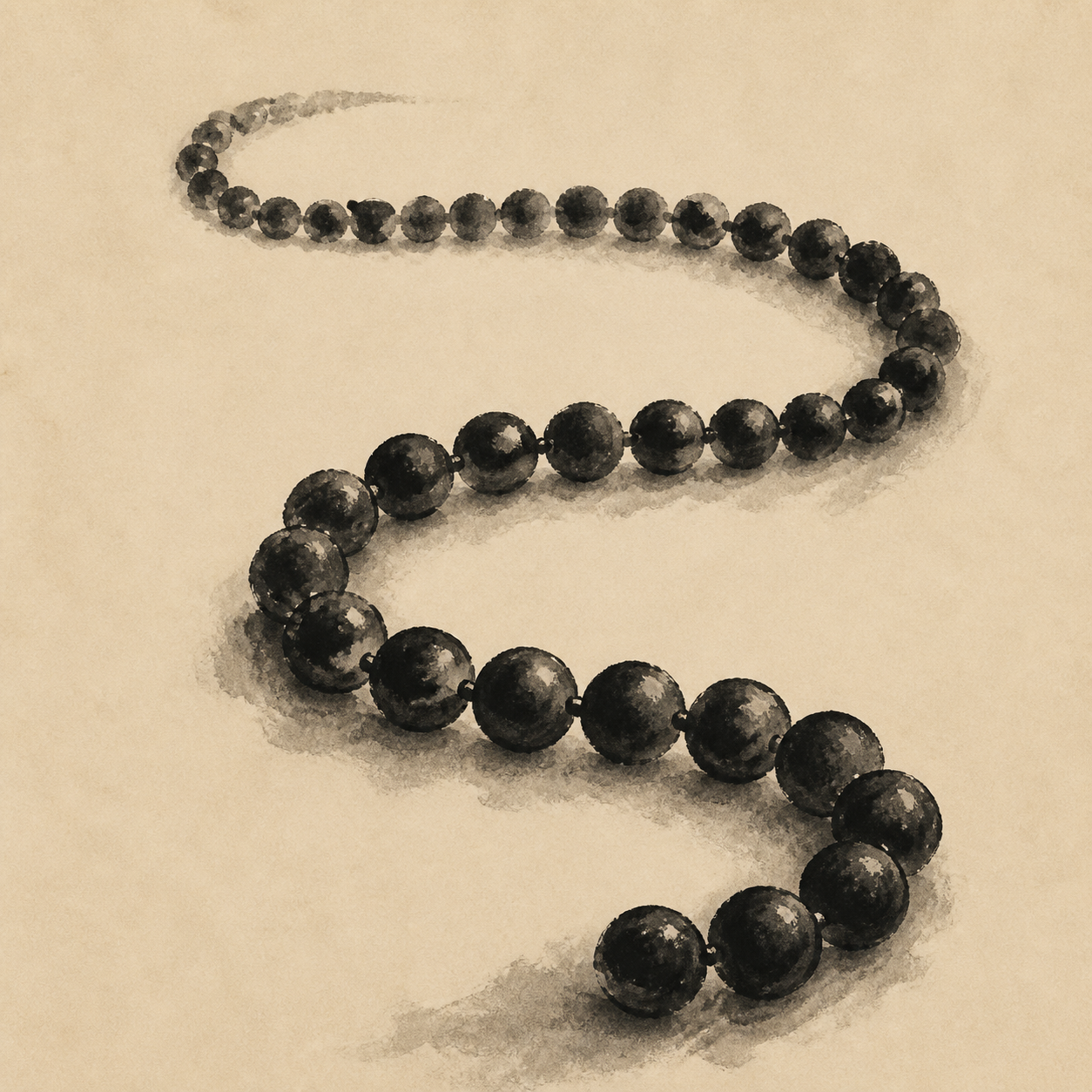
A polymer is a long chain — sometimes millions of links — made by stringing together a small repeating unit called a monomer. That such things existed at all was fiercely denied: when Hermann Staudinger proposed in 1920 that rubber, cellulose, and proteins were single giant molecules rather than clusters of small ones loosely stuck together, his colleagues ridiculed him for fifteen years. He was right, and the 1953 Nobel Prize said so. By then the chains he had vindicated were already remaking the material world — nylon, polyethylene, Teflon — and today humanity produces over 400 million tonnes of plastic a year. The very toughness that made these chains so useful is exactly what now makes their waste so hard to be rid of.
What is remarkable is how much follows from so plain a starting point. Nature discovered the trick first — cellulose, proteins, DNA, and natural rubber are all polymers — and industry only caught up in the twentieth century. Once you have long chains, a mere handful of variables account for the enormous range of what plastics can be. The first is simply length. Short chains of ethylene are waxes and oils; let the same chain grow to thousands of links and it becomes tough, load-bearing plastic, for a reason as homely as a bowl of spaghetti — long chains tangle together and cannot easily slide past one another. The second is order: where the chains pack neatly into crystalline regions the material turns stiff, dense, and often cloudy, while tangled, amorphous zones keep it soft and tough, and most plastics are a negotiated blend of the two. The third is cross-linking — whether the chains are tied to one another. Chains that merely lie beside their neighbors can be melted and reshaped over and over, which is why a milk jug can be recycled; chains lightly tied together give the springiness of rubber; chains bound into a dense permanent web give a hard thermoset that, once set, will never melt back. Length, order, cross-linking: with only those three dials one arrives at everything from cling film to the bulletproof fiber in a vest. And the same logic runs through biology, where a protein is simply a chain whose exact sequence of links dictates how it folds into a working three-dimensional machine — a single line of code writing its own architecture.