Photosynthesis
- Inputs (CO₂, H₂O, light) & outputs (O₂, glucose)not yet tested
- Chlorophyll & accessory pigmentsnot yet tested
- Light reactions in the thylakoidnot yet tested
- Calvin cycle (carbon fixation)not yet tested
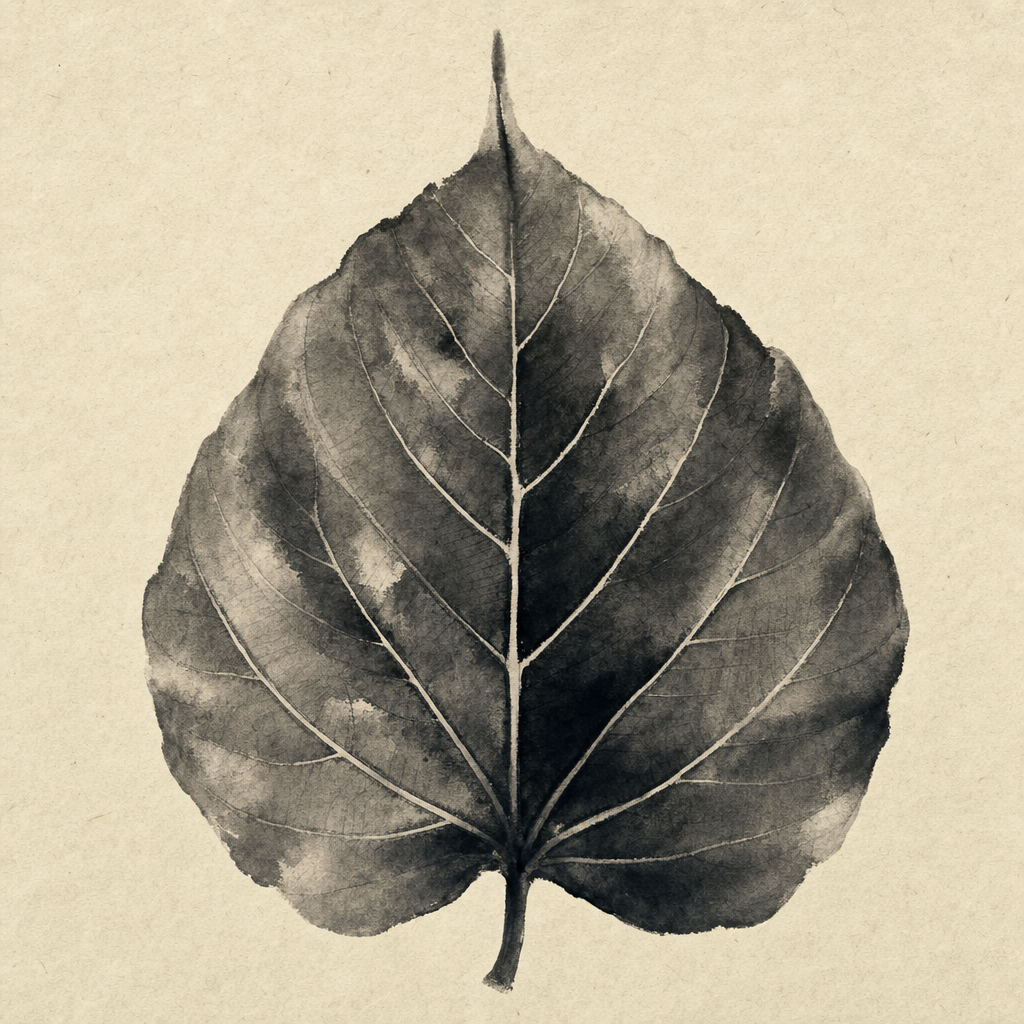
Sunlight, water, and air, combined inside a green leaf, become sugar. The reaction has been running on Earth for more than 3 billion years — first in cyanobacteria, then in the chloroplasts of every plant, alga, and seaweed. Photosynthesis is the primary energy event of the biosphere: nearly every calorie consumed by every animal, every drop of fossil fuel burned by every engine, every breath of oxygen drawn by every aerobic organism is downstream of a leaf catching a photon. The Great Oxidation Event (~2.4 billion years ago), during which photosynthesis pumped enough oxygen into Earth's atmosphere to transform the planet's surface chemistry, is the most consequential single event in biological history.
The overall reaction: 6 CO₂ + 6 H₂O + light → C₆H₁₂O₆ + 6 O₂. Photosynthesis happens in two stages. The light reactions (in the thylakoid membranes of chloroplasts): chlorophyll absorbs photons (chlorophyll a absorbs red and blue, reflecting green — which is why plants are green); the absorbed energy excites electrons, which are passed down an electron transport chain (Photosystem II → cytochrome b6f → Photosystem I); water is split as the electron source (4 H₂O → O₂ + 4 H⁺ + 4 e⁻) — this is the source of atmospheric oxygen; the proton gradient drives ATP synthase; NADPH is produced as a high-energy electron carrier. The Calvin cycle (in the chloroplast stroma): the enzyme RuBisCO (the most abundant protein on Earth) fixes CO₂ onto a 5-carbon sugar; ATP and NADPH from the light reactions reduce the products to glucose precursors; the cycle regenerates RuBisCO's substrate. RuBisCO is famously inefficient — it catalyzes only ~3 reactions per second and confuses oxygen for carbon dioxide about 25% of the time, an evolutionary holdover from when atmospheric oxygen was negligible. Different photosynthetic strategies: C3 plants use the basic Calvin cycle; C4 plants (corn, sugarcane, ~25% of terrestrial productivity) concentrate CO₂ before delivering it to RuBisCO, increasing efficiency in hot, dry conditions; CAM plants (cacti, succulents) open their stomata at night and run the Calvin cycle by day with stomata closed. Net primary productivity is on the order of 100 billion tons of carbon per year globally, half from terrestrial vegetation and half from oceanic phytoplankton. Fossil fuels are buried photosynthetic biomass: burning them now releases photosynthetic energy stored over deep time, on a timescale a million times faster than it was sequestered.