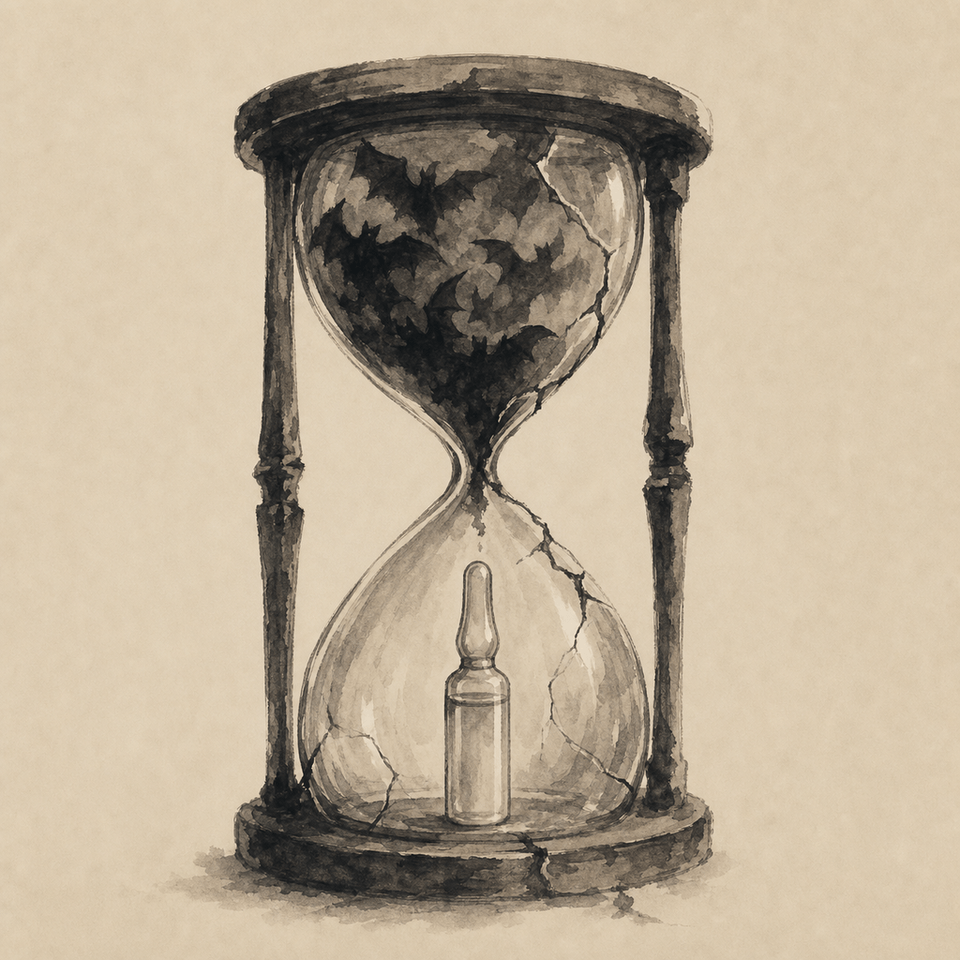
Pandemic Risk
COVID was a drill for the plausible. The next one may not grade as kindly. The 2019–2023 coronavirus pandemic killed at least seven million people directly, displaced another two to three times that in excess mortality, and stress-tested every state's response capacity in real time. It also rewrote the rules: within a year of the first sequenced genome, mRNA platforms — Pfizer-BioNTech, Moderna — had moved a vaccine from sequence to needle, a feat that previously took a decade. Yet the lessons learned are partial, contested, and unevenly distributed: which travel measures and non-pharmaceutical interventions helped, when; how to communicate uncertainty; how to keep masks, ventilators, and vaccine inputs off brittle just-in-time supply chains. Even human challenge trials were attempted, but too narrowly and too late to settle the central policy disputes. Little of this has hardened into doctrine. Most governments have moved on. Most pathogens have not.
Pandemic risk belongs to a class of low-probability, high-consequence threats that interacts poorly with normal political budgeting. Pandemics are rare on the scale of any single career but frequent on civilizational time — the 1918 Spanish flu killed perhaps 50 million; HIV/AIDS has killed 40 million and counting; SARS (2003), MERS (2012), Ebola (2014), COVID (2019), and mpox (2022) followed in quick succession. The arithmetic is brutal: a threat that recurs every few decades will, across a lifetime, almost certainly arrive, yet sits below the horizon of any election cycle. The next one could come from zoonotic spillover — highly pathogenic avian influenza H5N1 is the perennial worry, with mammal-to-mammal transmission newly observed in dairy cattle in 2024 — from a laboratory leak (the COVID-origin question remains unresolved, while research that can increase pathogen capabilities continues under varying definitions and oversight), or from deliberate release. The defensive infrastructure — surveillance networks, rapid vaccine platforms, manufacturing capacity, coordination through the WHO — was only partially built and remains fragile and underfunded. The post-COVID Pandemic Agreement, adopted in 2025 after three years of negotiation, is a legally binding framework, but its crucial pathogen-access and benefit-sharing annex remained unfinished into 2026; without the annex it cannot open for signature and ratification, much less enter into force. The gain-of-function policy debate has moved chiefly by executive action — a 2025 U.S. order paused federal funding for specified categories of work pending a new oversight framework — and the underlying argument is no nearer resolution than it was in 2020. The structural lesson is that the world built just enough apparatus to feel prepared, and not enough to be.