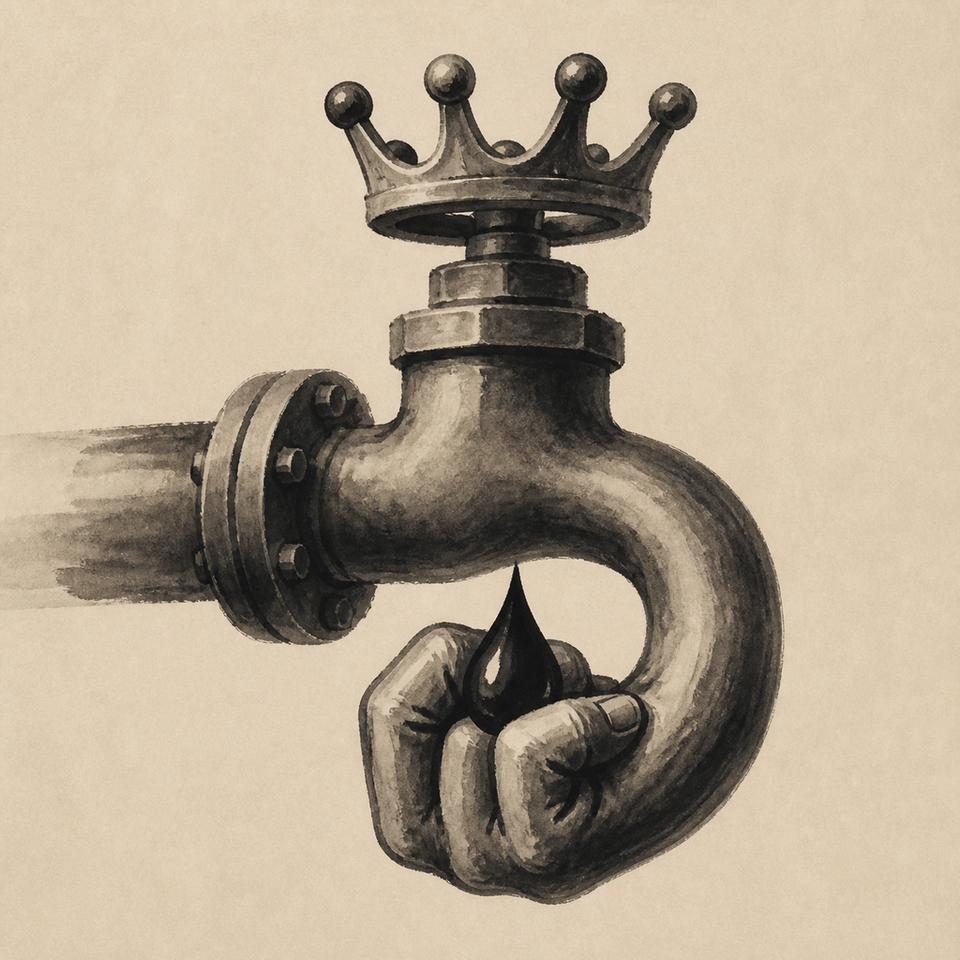
OPEC
On October 17, 1973, in retaliation for American resupply of Israel during the Yom Kippur War, the Arab oil producers — acting through OAPEC, the Organization of Arab Petroleum Exporting Countries — announced monthly production cuts and, days later, an embargo on oil exports to the United States and the Netherlands. Within months the posted price of crude leapt from about $3 to nearly $12 a barrel — a quadrupling. Gas stations across America rationed fuel and ran lines around the block; speed limits dropped and Sundays went driveless in parts of Europe. The Western developed economies, which had grown for thirty years on the assumption of cheap and abundant oil, suddenly entered a decade of stagflation, recession, and political crisis. The age of cheap oil ended that October.
The 1973 embargo was the moment the Global South discovered it could price the West's politics. It was also the moment the West discovered how exposed its energy security was. Both lessons stuck. The aftershocks reshaped global politics for the next half-century: a massive wealth transfer to the Gulf states (seeding the financial-services and sovereign-wealth-fund era they still dominate, and recycling petrodollars back into Western banks); the politicization of energy security in every Western foreign-policy doctrine since the Carter Doctrine of 1980; the long American cultivation of Saudi Arabia as a strategic partner; the creation of the US strategic petroleum reserve in 1975; the eventual North Sea, Alaskan, and shale-driven push toward Western energy independence; and the founding of the International Energy Agency in 1974 to coordinate emergency stocks. OPEC itself — the broader cartel of which the Arab producers were one bloc — has had a more chequered career, sometimes able to discipline its members, often undercut by cheating and by recession-driven demand collapse, and its market power has eroded with each new producer outside the cartel, above all the United States after the shale boom.