Mimesis
- Plato: art as imitation twice removednot yet tested
- Aristotle: natural imitation and catharsisnot yet tested
- From general nature to Romantic expressivismnot yet tested
- Modernism, Auerbach, and the limits of mimesisnot yet tested
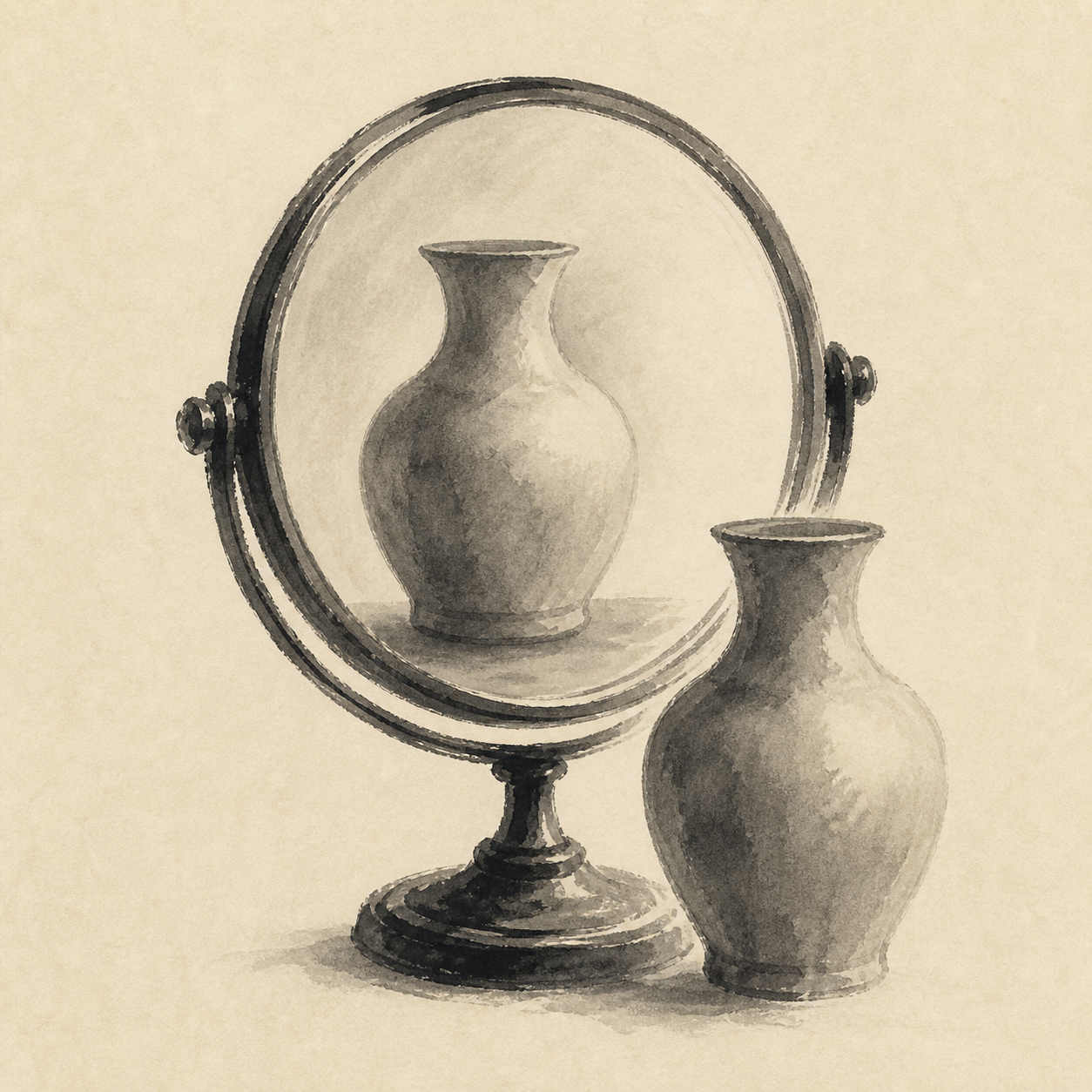
Plato and Aristotle — the two foundational Western philosophers — agreed that art is mimesis (imitation, representation of nature) and disagreed sharply about whether that was a good thing. Plato, in Republic Book X (~375 BCE), argued that art is imitation of imitation: the everyday world is itself an imperfect copy of the Forms, so a painting of a bed is twice removed from reality and should be banished from the ideal city. Aristotle, in Poetics (~335 BCE), pushed back — imitation is natural to humans, art imitates universal patterns, and poetry is more philosophical than history. The disagreement set the terms for two and a half millennia of European aesthetics, until photography and modernism together made the framework suspect.
The classical framework had art imitate nature, human action, or ideal forms; Plato's anti-mimetic critique was triple — art is metaphysically twice removed from the Forms, epistemically deceptive, and morally appeals to the lower part of the soul, a recurring afterlife visible in every iconoclasm since. Aristotle's defence was that imitation is cognitively natural, we learn from it, and tragedy has a cathartic function, representing pity- and fear-arousing actions to purge the audience; Poetics — a lecture-note collection rediscovered in the Renaissance — became the foundational document of Western drama theory. Italian humanists (Alberti, Vasari, Leonardo) revived classical mimesis as selective representation, and Sir Joshua Reynolds in his Royal Academy Discourses (1769–1790) gave the most influential English-language statement of neoclassical mimesis as imitation of general nature. The Romantic and post-Romantic departures were gradual: Wordsworth's 1800 preface shifted the model to the language really used by men, Romantic expressivism treated art as expression of the artist's inner life, and aestheticism (Whistler, Pater, Wilde, Mallarmé) argued that art has its own ends. The modernist break by 1910 — Cubism, Kandinsky's first abstract paintings, Schoenberg's atonality — decisively rejected representation, justified by photography making literal mimesis obsolete. Erich Auerbach's Mimesis (1946), written in Istanbul exile during the war, traced representation of reality through Western literature from Homer to Virginia Woolf; standard objections — music doesn't obviously imitate, abstract doesn't either, and much non-Western art (Islamic ornament, Chinese calligraphy, Indian raga) resists mimetic analysis — show where the framework's reach stops.