Indian Ocean Trade
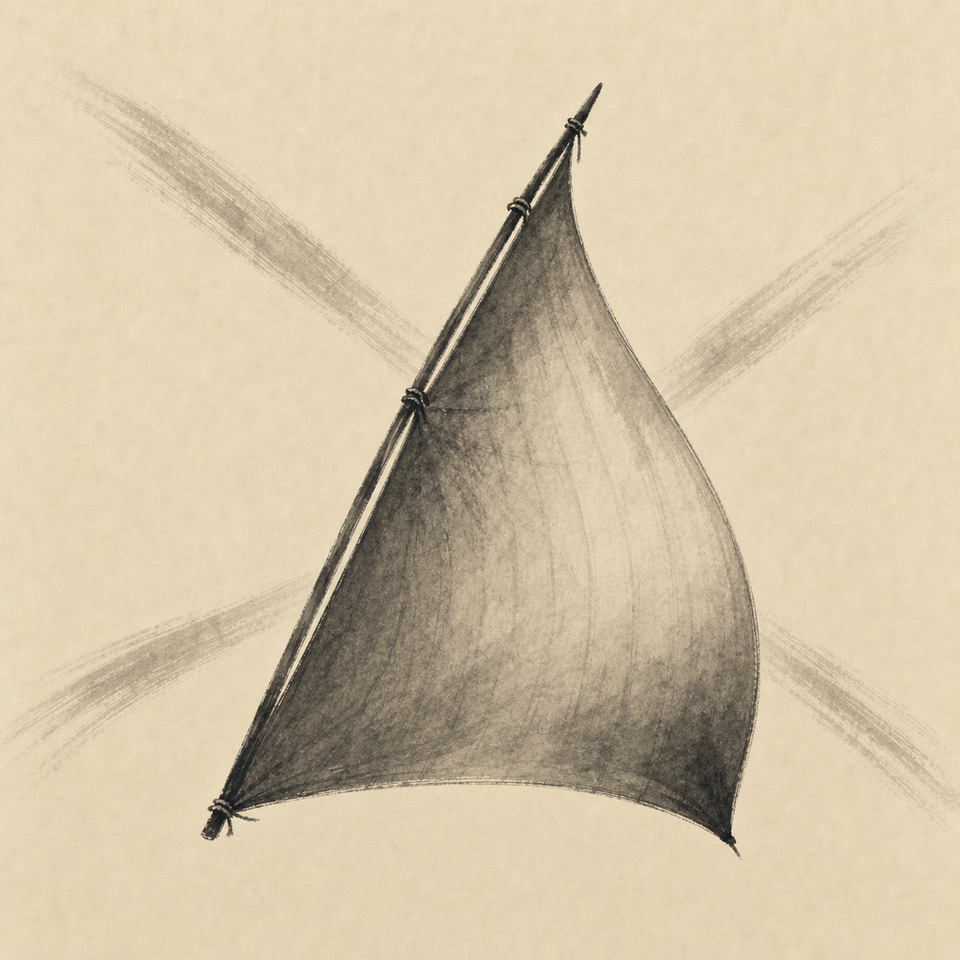
For about a thousand years before any European ship reached it, the Indian Ocean was the busiest commercial space on earth. Arab dhows, Chinese junks, Indian merchant fleets, and Swahili trading craft all worked the waters between East Africa, Arabia, India, Southeast Asia, and southern China. The system ran on the monsoon winds, which reverse direction predictably twice a year — blowing from the southwest in summer and the northeast in winter. Sailors could time their voyages to ride the southwest monsoon east, conduct business for a season while the wind held them in port, and ride the northeast monsoon home. Get the timing wrong and you waited months. The world's first reliable timetable for long-distance trade was meteorological.
Indian Ocean trade was distinctively peaceful, multicultural, and self-regulating. It had no dominant naval power for most of its run — Chinese, Arab, Indian, and Persian merchants all worked the same routes under local protections, with disputes adjudicated by trading guilds and city-state authorities rather than navies. Diaspora communities knitted it together: Gujarati and Tamil merchants settled in Aden and Malacca, Hadhrami Arabs along the African coast, Chinese in the ports of the Malay archipelago. Swahili coastal cities like Kilwa and Mombasa grew rich as intermediaries, building in coral stone and minting their own coinage; Kilwa controlled the gold flowing out of Great Zimbabwe to the south. Malabar pepper, Indonesian cloves and nutmeg, Chinese porcelain, African gold, Yemeni coffee, Indian cotton textiles, and Arab horses moved through a web of relationships maintained by intermarriage, religious networks (especially Sunni Islam, which became the trade's lingua franca and legal framework), and credit instruments that worked across linguistic boundaries. Even China's vast treasure fleets under Admiral Zheng He, between 1405 and 1433, came to trade and overawe, not to conquer, then were abandoned by Ming policy. When Vasco da Gama arrived at Calicut in 1498, he encountered a working civilization that did not particularly need him — his trade goods were so shoddy the local zamorin was unimpressed — and which the Portuguese, having no commodity anyone wanted, would have to force their way into through artillery, fortified ports, the cartaz pass system, and selective massacre. They militarized a sea that had run for a millennium on trust.