Indian Independence & Partition
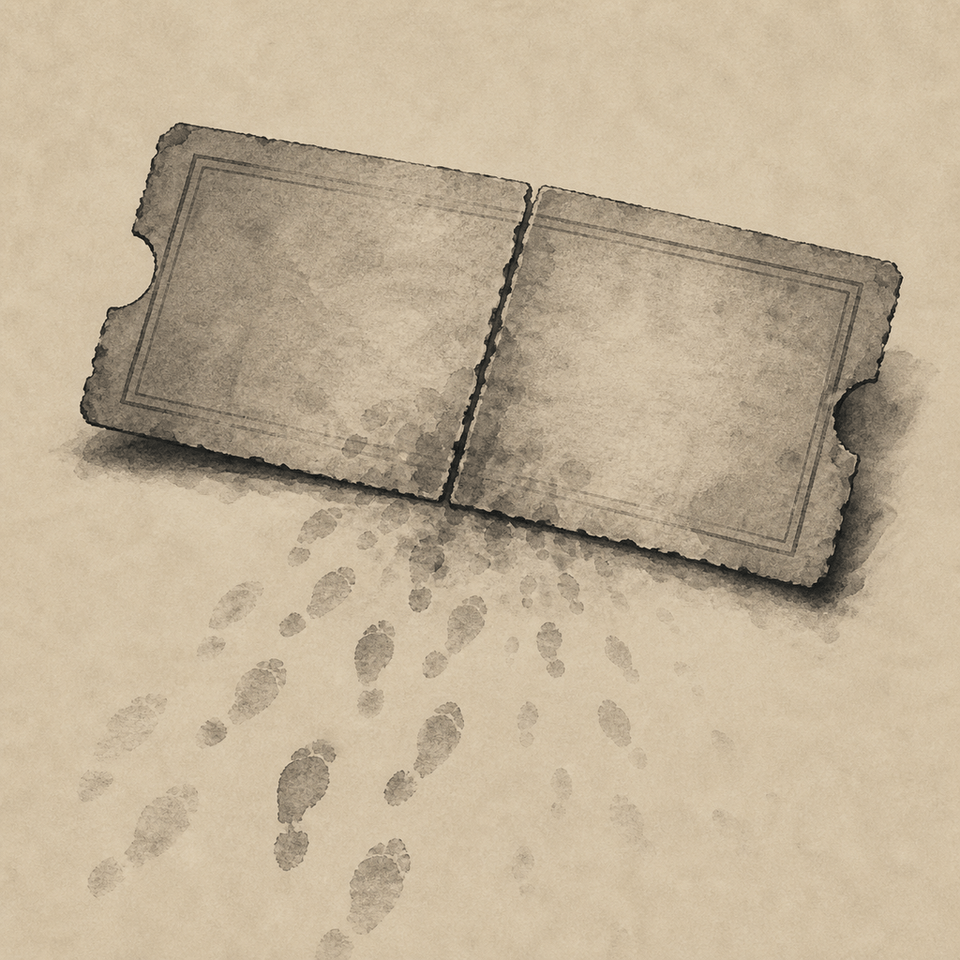
On August 15, 1947, British rule over the subcontinent ended at midnight. In its Company and Crown forms, it had governed roughly a fifth of humanity for nearly two centuries. India and Pakistan, drawn on a map by a British lawyer named Cyril Radcliffe who had never been to either country and was given just five weeks to partition a subcontinent, became independent states. Radcliffe's award, slicing Punjab and Bengal along religious lines, was not even published until after the handover. Approximately fifteen million people crossed the new border in the months around and after partition. Approximately one million were killed in communal violence on the way. It was the largest mass migration, and one of the largest waves of ethnic cleansing, in recorded history.
The partition was not inevitable. For most of the 20th century the Indian National Congress, under Gandhi and Nehru, had imagined a single, religiously pluralist, post-colonial India. By 1940, however, the Muslim League under Muhammad Ali Jinnah had concluded — its fears hardened by the breakdown of power-sharing talks, especially the collapse of Congress–League coalition negotiations in the United Provinces after the 1937 elections — that Muslims would be a permanent minority in a Hindu-majority democracy, and demanded a separate state in the Lahore Resolution. The 1946 Cabinet Mission's federal compromise collapsed; Jinnah's call for Direct Action in August 1946 triggered the Great Calcutta Killings, and communal massacres spread to Bihar and Punjab, making partition look less like a choice than a containment. The British, exhausted by war, bankrupted, and unable to rely on an Indian Army no longer certain to obey, accepted the logic. Under the last viceroy Mountbatten, the timetable was advanced from June 1948 to August 1947 — and the empire withdrew on a timeline of weeks. The administrative and human consequences were beyond their capacity, or interest, to manage; the army and police were themselves split along communal lines, and the boundary force of 50,000 was hopelessly overwhelmed. The two states that emerged — three, after Bangladesh's bloody secession from Pakistan in 1971 — have fought four wars, both possess nuclear weapons, and continue to dispute Kashmir, a Muslim-majority princely state entered by Pakistani-backed tribal fighters in October 1947. Its Hindu maharaja then acceded to India after appealing for military aid, and that contested accession ignited the first war. The communal logic of 1947 still structures the politics of both states more than seventy-five years later.