Hiroshima & Nagasaki
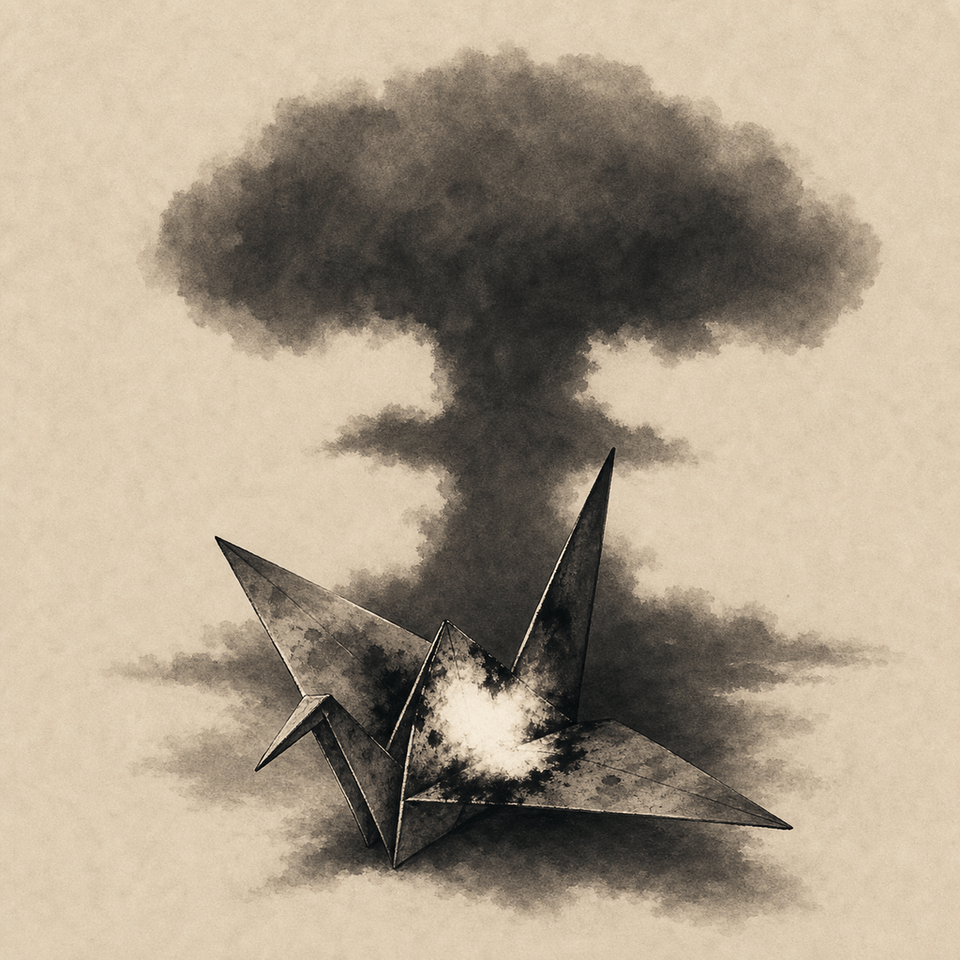
On August 6, 1945, an American B-29 named Enola Gay dropped a uranium-gun fission weapon — Little Boy — on Hiroshima, killing perhaps eighty thousand people in the initial blast and firestorm, and another sixty thousand from burns, injury, and radiation over the following months. On August 9, a plutonium implosion weapon, Fat Man, dropped on Nagasaki killed about forty thousand more. The fireball at each hypocenter briefly reached temperatures rivaling the surface of the sun. Six days later, on August 15, Emperor Hirohito announced Japan's surrender by radio — the first time most Japanese had heard his voice. As of 2026, no nuclear weapon has been used in war since.
The decision to use the bombs was, at the time, not especially controversial within the U.S. command. The alternatives — Operation Downfall, the planned invasion of the home islands (projected to cost hundreds of thousands of American casualties); continued conventional firebombing, which in the March 1945 raid on Tokyo alone had killed perhaps a hundred thousand civilians in a single night; or a demonstration on uninhabited terrain — were all considered, and none was clearly superior to the men who had to choose. The retrospective controversy — was it militarily necessary, given that Japan was already blockaded and beaten? was it ethical to target cities? was the timing aimed as much at Stalin and the looming Soviet entry into the Pacific war as at Tokyo's surrender? — has run for eighty years and is unsettled; historians like Gar Alperovitz and Richard Frank still draw opposite conclusions from the same archive. Hiroshima and Nagasaki became central to what scholars call the nuclear taboo: the felt revulsion that has helped keep nuclear weapons out of war for eight decades. No single treaty forbids their use in every circumstance; non-use has rested on a volatile mix of deterrence, law, strategic interest, and moral revulsion. It is one of the most important, and most fragile, political facts of the modern era.