Feudalism & Manorialism
When the Carolingian state fragmented after Charlemagne's heirs partitioned it at Verdun in 843, and the last residue of the Roman tax system died with it, medieval Europe faced an awkward problem: how do you defend a settled population against Viking, Magyar, and Saracen raiders when you cannot pay an army? The solution, worked out across the ninth and tenth centuries, was feudalism — a graduated system of land grants in which a king granted estates to nobles, who granted smaller estates to knights, who in turn provided armed service when the king called. A mounted, armoured knight was ruinously expensive; only land could fund one. Land replaced money as the primary instrument of state finance.
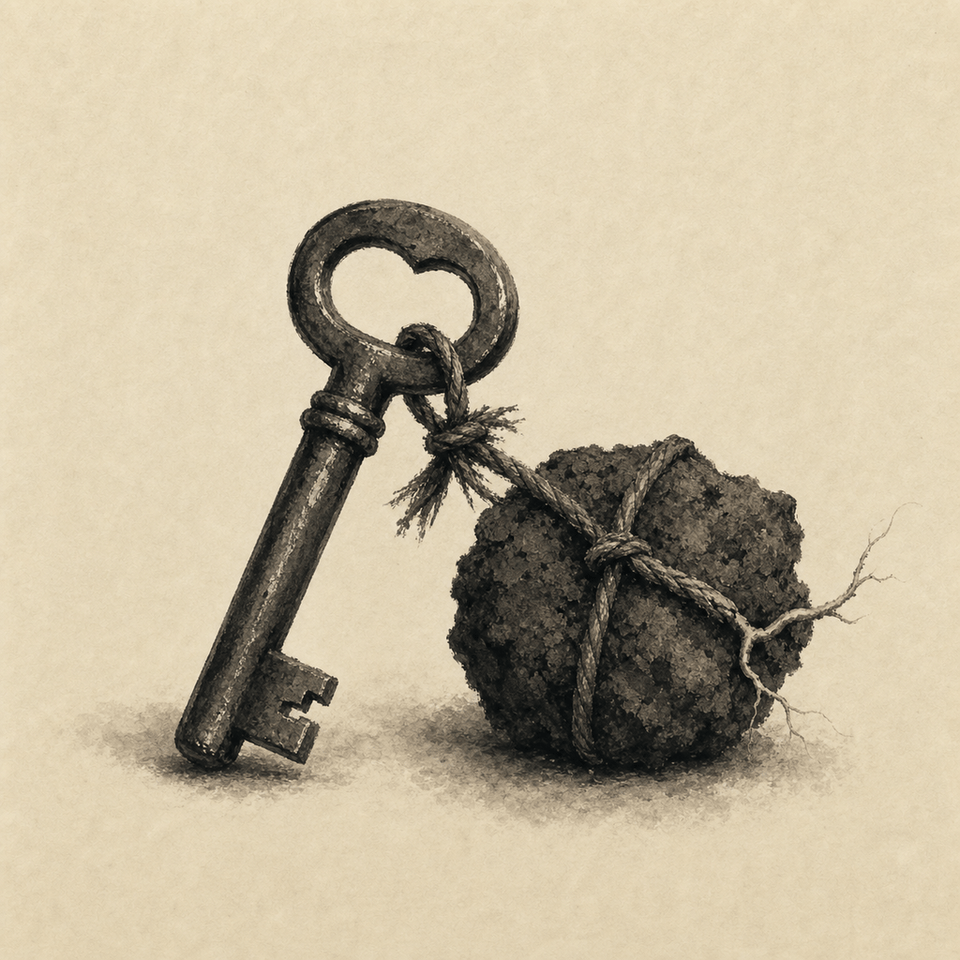
Underneath the noble pyramid was manorialism — the actual economic engine. A manor was a self-contained estate where a lord owned the land and peasants worked it in exchange for protection, the right to farm strips for their own families, and a share of common woodland and pasture. The peasants were tied to the land — they could not leave without permission, owed labour days on the lord's demesne, paid in kind and in dues at the lord's mill and oven, and were transferred with the estate when it changed hands. This was serfdom, the dominant labour relation in much of Europe for nearly a thousand years; at its height perhaps three-quarters of the rural population were unfree. The system was not centrally designed; it emerged from a thousand local bargains sealed by an oath of homage, codified into custom, eventually into law, and bound together by the fief — the granted land that made the obligation real. It produced a remarkably decentralized political order in which kings were often weaker than their major dukes, and dukes negotiated with their vassals as near-equals. Loyalty ran only one link up the chain — a French king had little hold over his vassals' vassals, which is why the early Capetians controlled barely the Île-de-France and spent three centuries clawing real power back from over-mighty subjects like the dukes of Normandy, who after 1066 were also kings of England. The medieval European state was not the absolutist monolith later monarchies pretended to inherit; it was a negotiated patchwork of reciprocal, conditional obligations.