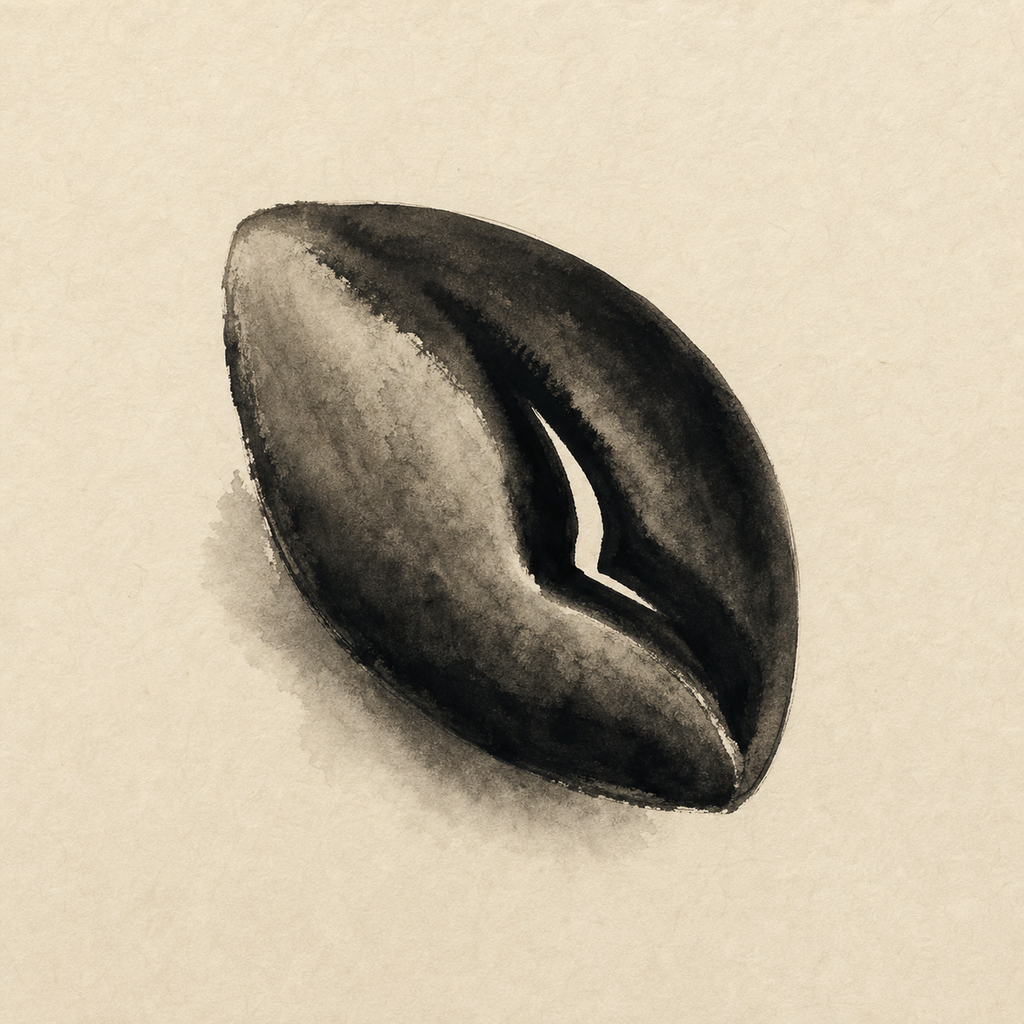
Fear & the Amygdala
- Klüver-Bucy and the lesioned amygdalanot yet tested
- Basolateral input, central-nucleus outputnot yet tested
- Fear conditioning and its extinctionnot yet tested
- PTSD and amygdala-driven hyperconsolidationnot yet tested
In 1939 the psychologist Heinrich Klüver and the neurosurgeon Paul Bucy removed both temporal lobes (including the amygdalae) from rhesus monkeys, trying to find where in the brain mescaline was acting, and got something they did not expect: the animals became strikingly placid, unable to recognize threats that had previously terrified them, tried to eat every object (food, feces, stones), tried to mate with every conspecific regardless of sex or appropriateness, and picked up snakes without flinching. The Klüver-Bucy syndrome — psychic blindness to emotional and biological significance — was one of the most theoretically loaded findings of twentieth-century neuroscience. Some small almond-shaped subcortical structure (Latin amygdala, "almond") was responsible for attaching emotional salience to perceptual content.
The amygdala is a cluster of nuclei in the anterior medial temporal lobe, bilaterally symmetric, about 1.5 cm³ in humans. The basolateral complex is the primary input region — sensory information from thalamus, sensory cortices, prefrontal cortex — and the central nucleus is the primary output, projecting to brainstem nuclei for freezing and sympathetic activation and to the bed nucleus of the stria terminalis for sustained anxiety as opposed to acute fear. Fear conditioning is the canonical paradigm: a conditioned stimulus paired with an unconditioned stimulus until the CS alone elicits freezing, autonomic activation, and startle, with the rodent circuitry mapping CS information arriving at the lateral amygdala, converging with US information, and strengthening synaptic connections through NMDA-receptor-dependent LTP. Two pathways carry the CS: a fast low road (thalamus → amygdala, ~12 ms) delivers a coarse signal sufficient for immediate startle; a slow high road (thalamus → cortex → amygdala) delivers the contextualized signal supporting nuanced responses. Extinction is new learning — a competing safety memory in infralimbic prefrontal cortex that inhibits the fear memory in appropriate contexts — and failure of extinction is the core of anxiety disorders and PTSD. Patient S.M., a woman with bilateral amygdala calcification from Urbach-Wiethe disease, shows no fear response to external threats — she handles snakes, walks through haunted houses laughing, and has been threatened with weapons without responding appropriately. Her case established the amygdala as necessary for fear evoked by exteroceptive threat; notably, inhaling CO2-enriched air still triggers panic in her (Feinstein 2013), showing that interoceptive fear runs through a separate, amygdala-independent route. The amygdala is not simply the fear center — it also processes faces, social threat, novelty, and reward.