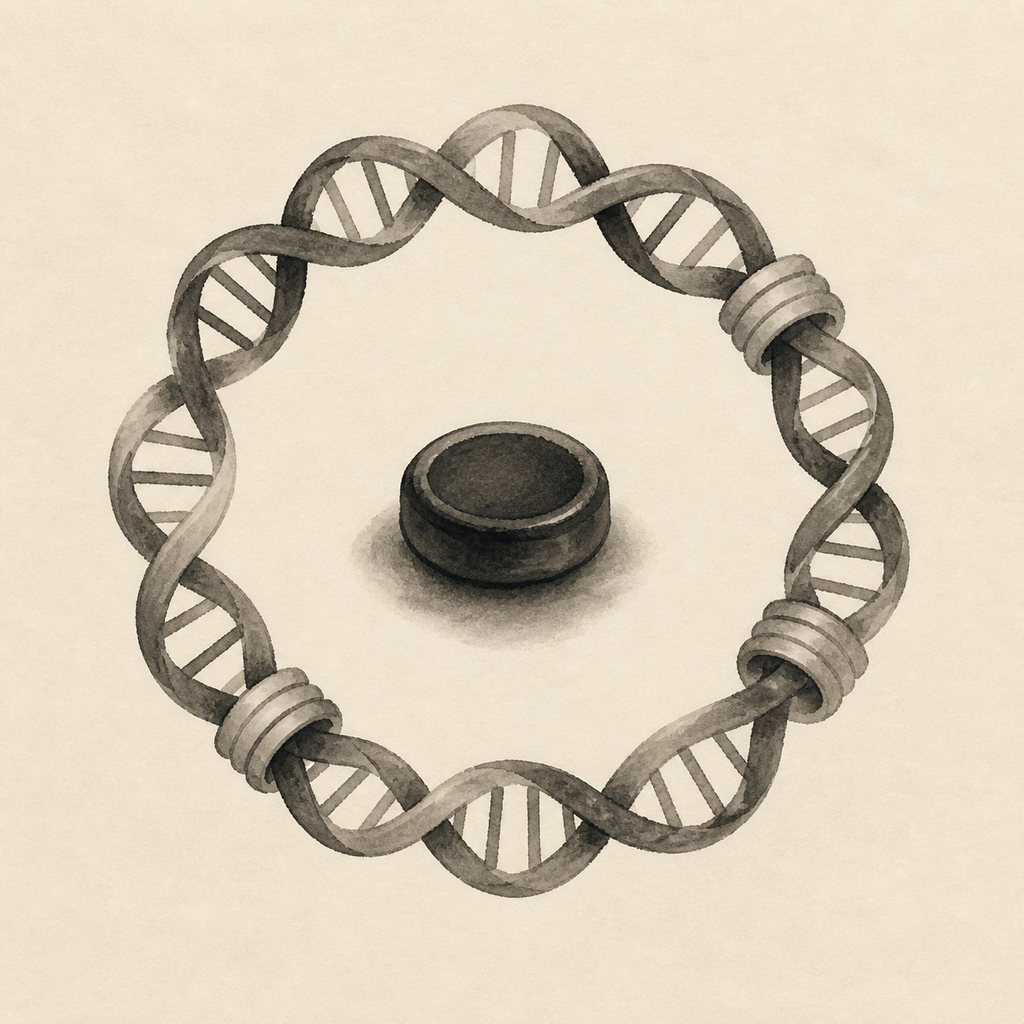
Epigenetics
- Methylation, histone marks, and chromatinnot yet tested
- Waddington's landscape and cell-type identitynot yet tested
- Imprinting and the Dutch Hunger Winternot yet tested
- Epigenetic clocks and epigenetic therapiesnot yet tested
Identical twins share the same DNA sequence. Yet their lives diverge — different diseases, different aging trajectories, different personalities. Some of the divergence is environmental, but a substantial portion involves genuine biological differences in gene expression between the twins. How, if their DNA is identical? The answer is epigenetics: a system of heritable but reversible modifications to the genome that do not alter the underlying sequence but substantially alter how it is read and expressed. Methylation marks on cytosines, modifications of histone proteins, and patterns of chromatin organization together produce a second layer of inheritance operating on top of the genetic code — and, since some marks are now known to travel across generations, a partial Lamarckian return that orthodox Mendelian genetics had excluded.
Epigenetic regulation operates through three molecular mechanisms working in concert. DNA methylation attaches methyl groups to cytosine bases, especially at CpG dinucleotides, and a methylated cytosine is typically transcriptionally silenced. Histone modifications — acetylations, methylations, phosphorylations on the protein octamers around which DNA is wound — open or close the surrounding chromatin to the transcriptional machinery, with combinatorial patterns rich enough that they are spoken of as a histone code. Chromatin remodeling complexes physically reposition the histone-DNA scaffold, exposing or hiding regulatory regions. The cell-type-specific patterns these mechanisms encode are what allow your liver and kidney cells, with identical DNA, to express radically different programs; Conrad Waddington's 1957 epigenetic landscape — differentiating cells rolling down a branching surface of progressively narrower fates — captures the cumulative narrowing.
The live debate is how much of this marking gets inherited across generations. Mitotic inheritance — a cell passing its epigenetic state to its daughters as it divides — is well-established and maintains tissue identity. Transgenerational inheritance through the germline is more controversial. The cleanest case is genomic imprinting, in which roughly a hundred human genes are expressed only from the maternal or only from the paternal allele depending on parent-of-origin methylation that survives the embryonic reprogramming wave. The Dutch Hunger Winter cohort, exposed to severe undernutrition in utero in 1944–45, shows distinctive methylation patterns and elevated metabolic-disease risk decades later. Michael Meaney's rats show maternal-care effects on offspring stress reactivity that travel through methylation of the glucocorticoid-receptor gene. Whether such effects scale into a meaningful inheritance channel in humans is what the next decade of epigenome studies will have to settle. The most striking biomarker is the epigenetic clock — methylation at specific CpG sites that predicts chronological age to within a few years and whose acceleration predicts mortality risk independently.