Cognitive Revolution
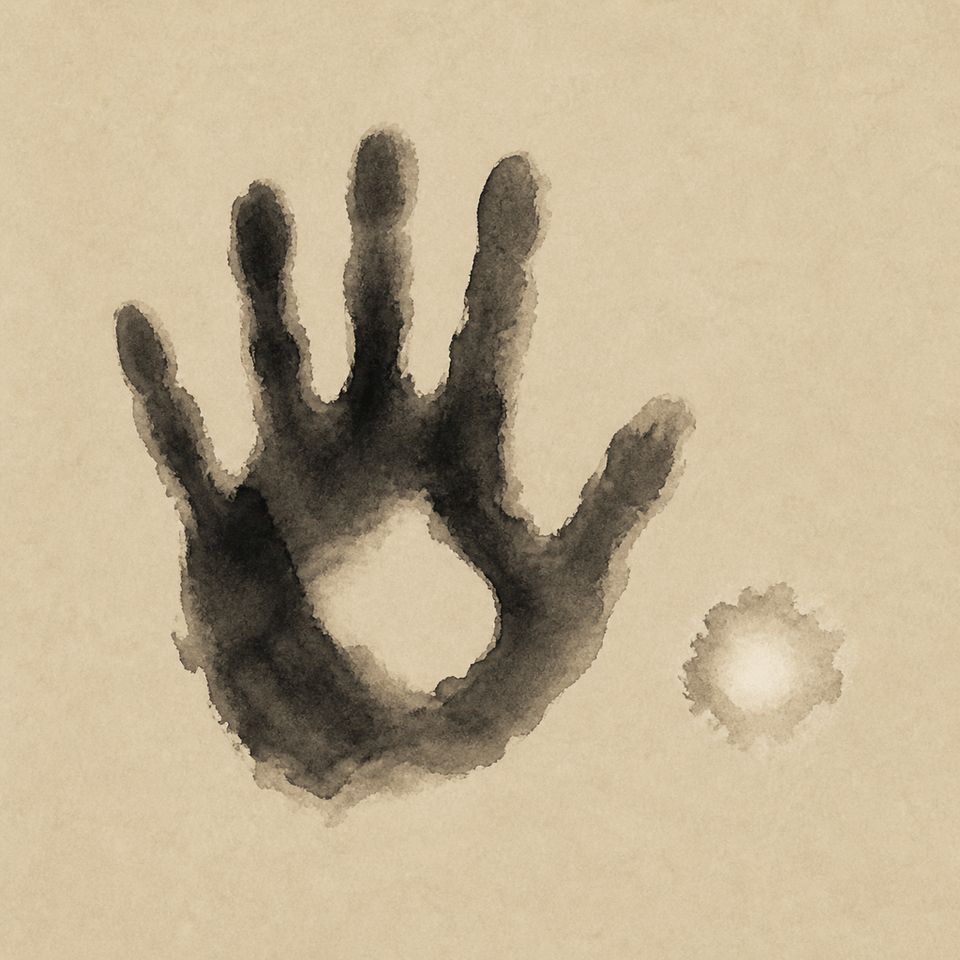
Around 70,000 years ago, something changed in the heads of Homo sapiens — a species that had been anatomically modern for roughly a quarter of a million years without doing very much with it. For two hundred millennia our ancestors knapped the same stone tools, generation after generation, leaving almost no trace of anything we would call culture. Then, in the archaeological record of the Upper Palaeolithic, the floodgates open: figurative cave painting at Chauvet and Lascaux, bone flutes tuned to recognizable scales, ostrich-shell beads strung as ornament, ritual burial with grave goods, ochre and seashells carried hundreds of kilometres from where they were found. The historian Yuval Harari called this the Cognitive Revolution. It is the moment when the species stopped being one clever ape among others and became what it is.
What the change consisted of, biologically, is still debated — a mutation rewiring language is the leading guess, perhaps in genes like FOXP2 that govern fine motor control of speech. The behavioural consequence is clearer. Sapiens could now talk about things that did not exist: gods, ancestors, future hunts, imaginary enemies, abstract debts. This is the trick that lets large groups of strangers cooperate. Chimpanzees can hold a troop of roughly fifty together by grooming and direct acquaintance; the natural human group, bound by gossip and language alone, tops out near Dunbar's number of about 150. To go beyond that ceiling you need shared fictions — myths, brands, money, nations, limited-liability companies — that bind unrelated people into common projects without any of them having met. Crucially, the fiction is flexible in a way genes are not: a tribe can revise its myths in a generation, where a wolf pack must wait for natural selection to change its behaviour, so culture began to evolve at a speed biology could never match. The pay-off was a colonizing speed nothing else on Earth could equal. Within fifty thousand years of the cognitive revolution, Sapiens had crossed open water to reach Australia by at least 50,000 years ago — a voyage requiring boats and planning — walked from Siberia to Patagonia, hunted to extinction most of the planet's large mammals (the mammoth, the giant ground sloth, the Australian diprotodon), and outcompeted or absorbed every other human species, Neanderthals and Denisovans among them, who survive now only as a few percent of the DNA in living non-Africans.