Balance of Power
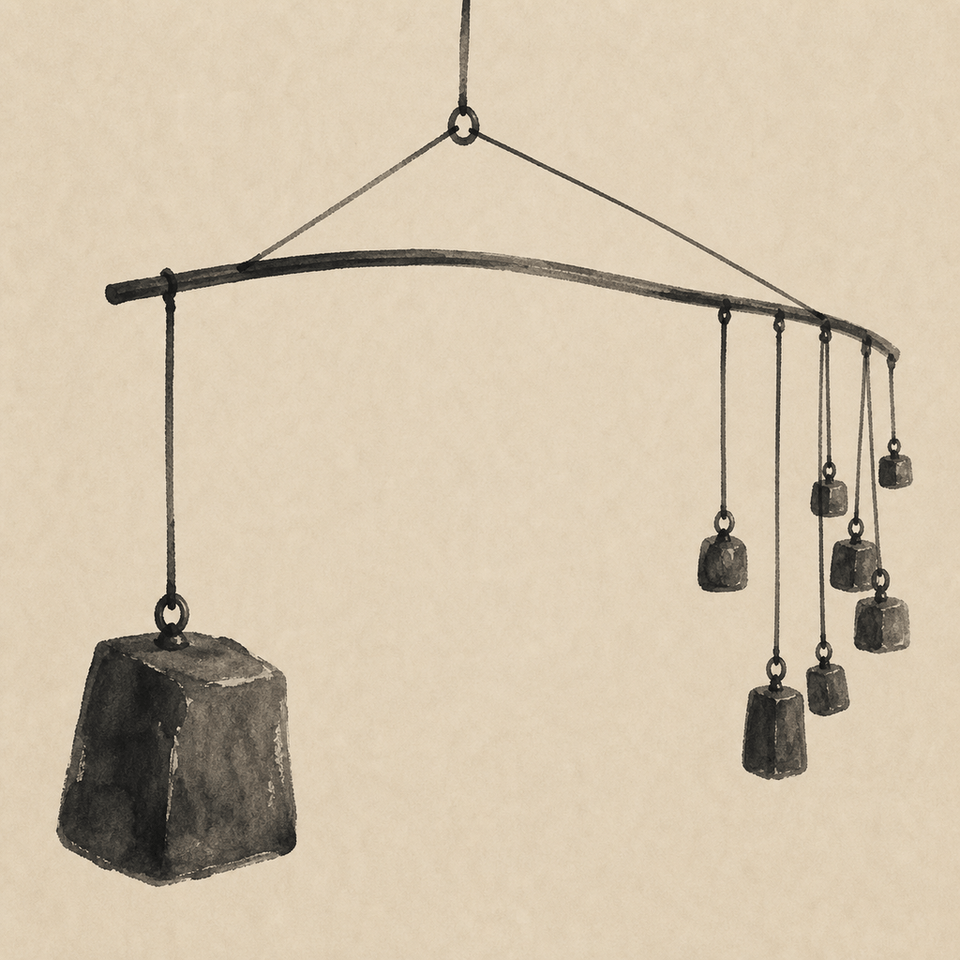
Balance of power is the idea — and, when it works, the practice — of preventing any single state from dominating an international system by counter-balancing alliances. The European state system from the Italian city-state rivalries of the fifteenth century through 1939 ran largely on this principle, with brief exceptions: when France under Louis XIV, or Napoleon, or Wilhelmine and Nazi Germany got too strong, the others combined against them. The logic is old enough that the diplomats of Renaissance Florence already practiced it, and Britain made it the explicit fixed star of its foreign policy for three centuries. Five centuries of European policy can be summarized in three words: prevent universal monarchy.
The mechanism is structural rather than moral. States balance against threats whether or not they agree on values; Britain allied with Stalin's Soviets against Hitler, and the Gulf monarchies have aligned with Washington against Iran. There are two routes: internal balancing (a state arming itself) and external balancing (assembling a coalition), and a system can run on either. It works when there are enough independent great powers with enough relevant capabilities to form effective coalitions, and when information about capabilities and intentions is good enough that miscalculations are rare. The post-Napoleonic Concert of Europe (1815–1854) is the high-water mark — a managed equilibrium that kept the continent free of general war until the Crimean War. The system fails when one state is so much stronger than the others that no plausible coalition can balance it (Rome at its height, briefly Napoleon before 1812, briefly post-1991 America); when ideological commitments override balancing logic (Cold War alliance rigidity); or when miscalculations cascade through interlocking alliances (the July 1914 crisis, where mobilization timetables turned a Balkan murder into a world war in six weeks). After 1945, Soviet power balanced the United States globally while American primacy went largely unbalanced inside the Western alliance — one reason scholars distinguish balancing against threats from balancing against power alone. China's rise is now producing coalitions such as the Quad and AUKUS; Russia's invasion of Ukraine, separately, drove NATO's expansion to Finland and Sweden. In both theatres the geometry is different from 1914 Europe: nuclear weapons, economic interdependence, and geography all change the calculus, and the analogies should be used with care.