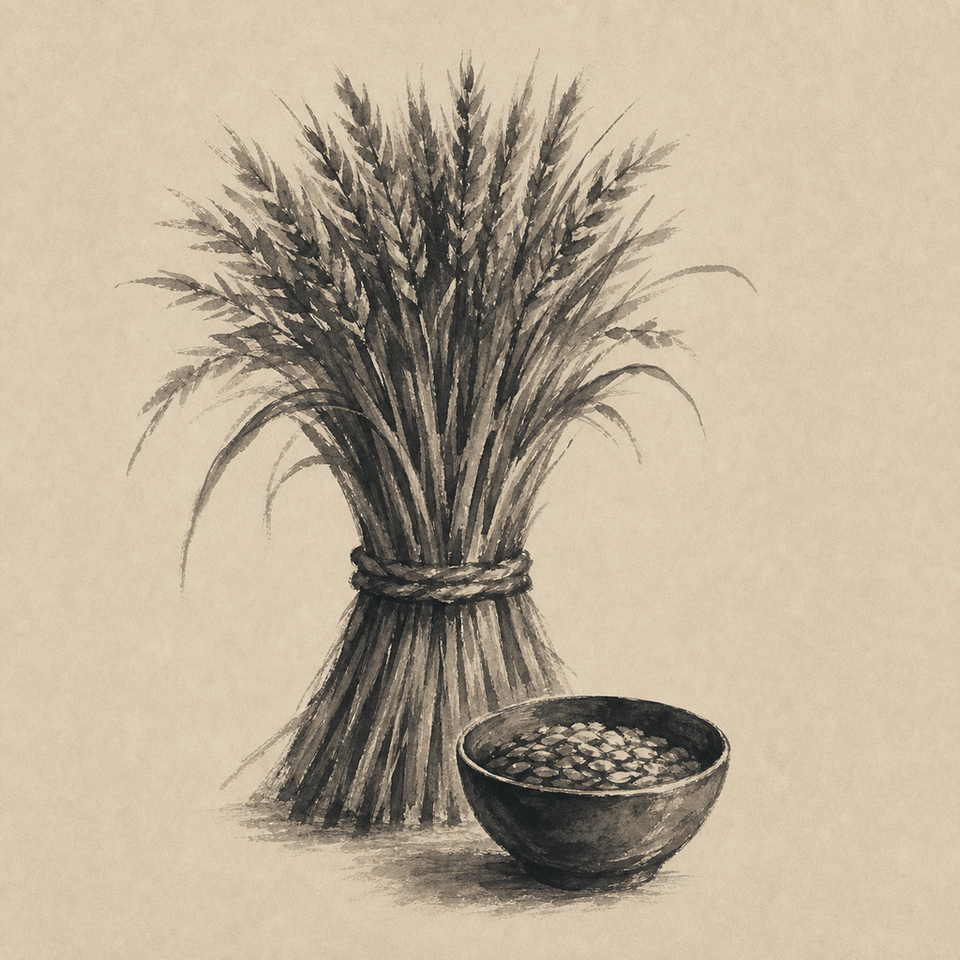
Agricultural Revolution
Around twelve thousand years ago, in a handful of places — the Fertile Crescent of the Levant, the Yangtze valley, highland New Guinea, the river basins of Mesoamerica — small groups of humans began to plant the seeds they had previously gathered. Within a few thousand years, almost every fertile valley on the planet had a farming culture in it. The cliché is that this was progress: the dawn of civilization, the escape from a brutish hand-to-mouth existence. The puzzle, when you actually look at the bones, is the opposite. Skeletons from the first farming villages show people who were shorter, sicker, and worked harder than the foragers they replaced — riddled with cavities, anaemia, and the spinal damage of grinding grain on their knees for hours a day.
So why did farming win, if it made individuals worse off? Because it was demographically ruthless. A foraging mother, carrying her child until it could keep pace with the band, could raise an infant only every three or four years. A farming family, settled and feeding babies on grain mush, could space births far more tightly and raise five children where a forager raised two. Within a few generations, agricultural populations simply outnumbered their healthier neighbours — and pushed them off the good soil, into deserts and forests where farming could not follow. The bargain came with hidden clauses. A field is immovable property that can be seized, so it invites raiders, walls, and armies; a grain surplus can be counted and stored, so it invites kings and scribes to tax and ration it; settled crowds living beside their livestock and their waste breed the zoonotic plagues — smallpox, measles, influenza — that foragers never knew. The diet itself was a trap: where a forager ate dozens of wild species and weathered the failure of any one, a farmer staked survival on a single cereal, so one bad harvest meant famine rather than a leaner season. And because stored grain could be hoarded, it became the first reliable engine of inequality, concentrating wealth and the power that follows it. The first humans to plant a seed did not know they were signing a contract that would commit their descendants to taxation, hierarchy, epidemic, famine, and patriarchy. The wheat, you might say, had agency too.